
A calcium blood test assesses the level of calcium in your bloodstream. Calcium is one of the pivotal minerals in your body. Your body needs calcium to make robust bones and teeth. Calcium plays a crucial role in the proper functioning of your nerves, muscles, and heart. Nearly, 99% of your body's calcium is accumulated in your bones. The remaining 1% migrates through your bloodstream. Calcium (Ca) blood test evaluates whether your body has abnormal (too high or too little) levels of calcium in the blood. A calcium test is also useful in diagnosing various health issues like bone disease, thyroid disease, kidney disease, heart disease, nerve diseases and so on.
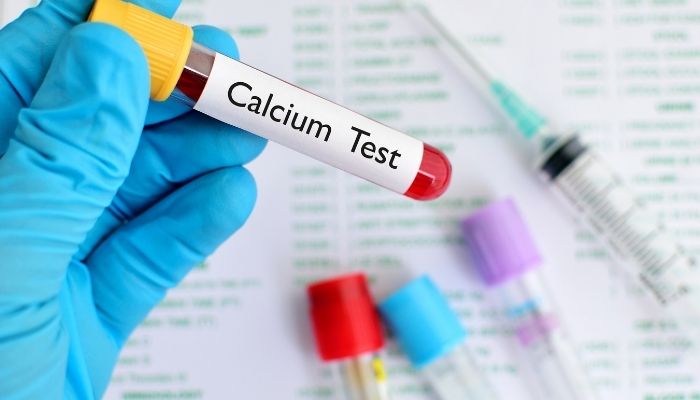
The cost of the calcium blood test is Rs.150 to Rs.700, depending on your location and place. Please check the price of the calcium test in Delhi/NCR, your nearby centers and other details.
Summary of Total Calcium Test
| Also known as | Total calcium, ionized calcium |
| Test Type | Blood |
| Calcium test includes | To check the levels of calcium in your blood |
| Preparation | You don’t need any special preparation for this test. Inform your doctor if you are taking any medications |
| Reporting | Within 24 hrs |
| Test price | The cost of the calcium blood test is Rs.150 to Rs.700, depending on your location and place. |
| Also included in | Health Insurance Plans |
| Related tests | Vitamin D test, CBC, kidney function test |
Your body has plenty of calcium and it uses this mineral in various ways including
- Strengthening your bones and teeth
- Contracting your muscles
- Narrowing and widening blood vessels
- Send and receive nerve messages
- Production of hormones
- Clot your blood
- Free calcium is not fastened to anything except in your blood
- Bound calcium is attached to albumin (a protein) or other substances in your blood
Total Calcium Test
This type of test evaluates both free and bound calcium. The doctors mostly recommend this type of test.Ionized Calcium Test
This type of test only measures free calciumPurpose of Calcium Test
A calcium test is a part of your regular health exam. Your doctor may recommend this test as a part of the comprehensive metabolic panel.Your doctor may suggest this test if you are suffering from a disease that might affect this mineral.
- Bone diseases like osteoporosis
- Various types of cancer like breast, kidney, lung, head, and neck
- Kidney or liver disease
- Nerve problem
- Overactive thyroid gland
- Pancreatitis (An inflammation of the pancreas)
- Parathyroid disease (glands in your neck are too active or not active)
- Your intestine is unable to absorb nutrients from foods
- Your EKG test shows some abnormalities
- Loss of appetite
- Constipation
- Always tired
- Intense thirst
- Nausea
- Vomiting
- Stomach aches
- Weakness
- Uneven heartbeat
- Muscle cramps
- Seizures
- Tingling in your feet and hands
Preparation for the Calcium Test
Though this test doesn’t demand any special preparation, inform your doctor if you are taking various supplements or prescribed medications. Some medicines that may hamper your test results are,- Antacids
- High blood pressure medicines
- Diuretics
- Lithium or Bipolar Disorder Medications
- Vitamin D supplements
Procedure of Calcium Test
- You need to visit a diagnostic center or a hospital where an experienced technician or nurse will put up an elastic band on your upper arm.
- The technician will collect the blood sample from your upper hand smoothly as he can clearly identify the vein
- He will insert the needle into your vein on the arm
- The sample will be deposited in a tube
- The needle and the elastic band will be removed
- The puncture site will be covered up by a bandage or gauze
The calcium levels normal values in adults are:
- Total blood calcium: 8.5 to 10.5 milligrams per deciliter (mg/dL)
- Ionized calcium: 4.65 to 5.2 mg/dl
- Overactive parathyroid or thyroid gland
- Cancer
- Sarcoidosis (an inflammatory disease where granulomas form around your body)
- Tuberculosis
- Staying in bed for too long
- Sufficient vitamin D in your diet
- High blood pressure drugs called thiazide diuretics
- Kidney transplant
- Low proteins in your blood
- Underactive parathyroid gland
- Inadequate calcium, magnesium, and vitamin D
- Too much phosphorus
- Pancreatitis
- Kidney failure