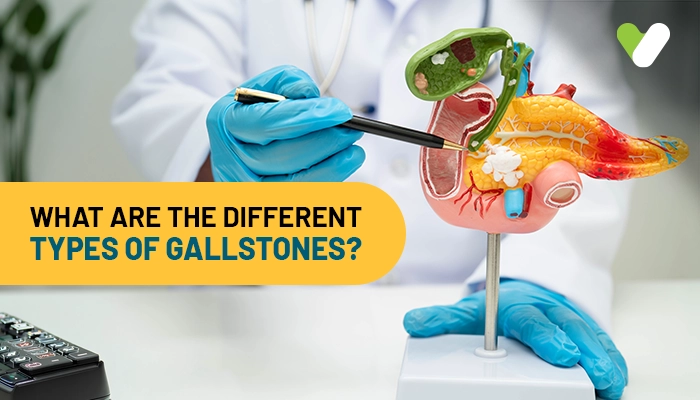
What are Gallstones?
Gallstonesare hardened, tiny deposits formed due to the solidification of digestive fluid, like bile and digestive juice produced by your liver. These stones form in the gallbladder, a small organ located under the liver. When these stones block the bile duct – the pipeline through which bile moves out of the gallbladder - it causes severe pain.
Types of Gallstones
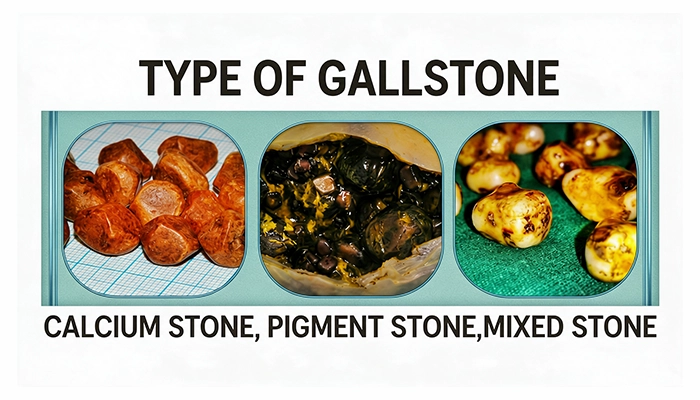
Depending on their composition, gallstones are classified into three subtypes: cholesterol, pigment, and mixed types, each with distinct composition, causes, and characteristics.
Let’s look more closely at each type of stone.
Gallstones are mainly classified as cholesterol, pigment, or mixed types, each with distinct composition, causes, and characteristics.
Cholesterol Gallstones
Cholesterol stones are the most common type, accounting for about 70–80% of gallstones. They are usually yellow-green and primarily composed of undissolved cholesterol, sometimes with small amounts of bilirubin or bile salts.
These stones tend to be smooth and spherical and are often solitary, floating in water because of their low calcium content. Risk factors include female gender, age over 40, obesity, high-fat diet, physical inactivity, and estrogen exposure from pregnancy or contraceptives.
They are more prevalent in Western populations and can vary in size, sometimes forming clusters.
Pigment Gallstones
Pigment stones are smaller, darker stones, typically brown or black, and are mainly composed of bilirubin. They are more common in individuals with liver disease or blood disorders such as sickle cell anemia or hemolytic conditions.
Pigment stones often form when red blood cells break down excessively, increasing bilirubin in bile. They tend to be multiple and can have irregular shapes, sometimes causing more severe gallbladder irritation
Mixed Gallstones
Mixed stones contain both cholesterol and pigment components, with cholesterol making up 30–70% of the stone and the remainder consisting of bile pigments, calcium salts, and other substances.
They are the most frequently encountered type in clinical practice and often form when cholesterol stones accumulate layers of other substances over time. Mixed stones usually sink in water, occur in multiples, and have flattened, faceted surfaces. About 20% of mixed stones are visible on X-rays due to their calcium content.

Symptoms of Gallstones
Gallstonescome in different sizes and can cause a variety of symptoms. Here are some common symptoms of gallstones:
- Abdominal pain, nausea, and vomiting
- Jaundice
- Fever and chills
- Back pain
- Indigestion, bloating, and gas
- Clay-coloured stools and dark urine
Not everyone with gallstones may experience these symptoms. However, if you experience any of the above symptoms, seek medical attention.

Causes of Gallstones
1. Family history: Gallstones may run in families; genetics generally plays a significant role in gallstone formation in people with a family history.
2. Incomplete emptying: When the gallbladder does not empty completely, the bile can form into solid particles.
3. Excess bilirubin: Bilirubin is a waste product produced by the liver and is eliminated from the body through the bile. If it isn’t eliminated properly, it can form solid particles and become gallstones.
4. High cholesterol: Excessive cholesterol present in the bile can form solid particles and become gallstones. This is one of the most common causes of gallstones.
5. Overweight: Being overweight or obese causes the liver to produce more cholesterol, which subsequently leads to gallstone formation.
6. Medical conditions: Certain medical conditions such as diabetes, Crohn’s disease, and liver disease can increase the risk of developing gallstones.
7. Pregnancy: Hormonal changes during pregnancy increase estrogen levels, which can increase cholesterol in the bile and generally raise the risk of developing gallstones.
How to Minimize the risk of developing Gallstones
Gallstonesare uncomfortable, but a few effective ways can reduce your risk. Here are some ways to prevent gallstones:
- Maintain a healthy weight by staying active and eating a balanced, nutritious diet.
- Avoid rapid weight loss
- Stay hydrated
- Limit alcohol consumption
- Monitor cholesterol levels
- In case of family history, consult your doctorto limit your risk
By adopting these preventive measures, you can reduce your risk of having gallstones and maintain a healthy lifestyle. However, if you experience symptoms of gallstones, such as abdominal pain, nausea, or vomiting, talk to yourhealthcare providerright away. With proper care and treatment, gallstones can be effectively managed.

Bottom Line
Understanding the different types of gallstones and their associated risk factors is essential. By understanding the types of gallstones and their causes, you can take preventive steps.
Disclaimer: This article is meant for informational purposes only and must not be considered a substitute for professional advice.