
Gallbladder stones are often silent until they significantly interfere with normal bodily functions. Most people who have gallbladder stones do not even know they have them. In fact, up to 80% of gallstones are "silent"—meaning they cause no pain and no health issues.
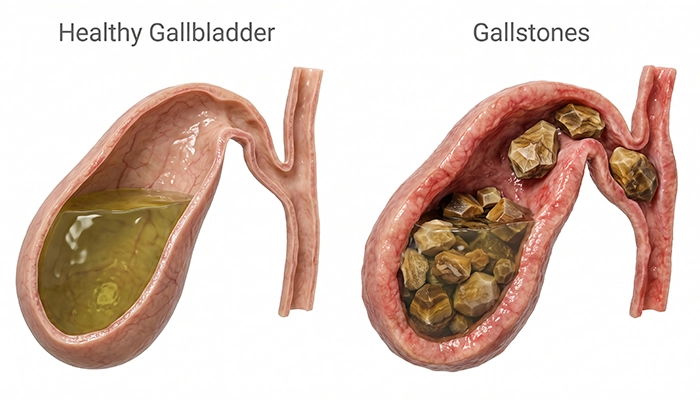
What Are Gallstones?
The gallbladder is a pear-shaped, tiny organ located just below the liver. Its primary job is to store bile, a fluid the liver produces that helps digest fats.
Gallstones form when the substances in bile (such as cholesterol or bilirubin) harden into solid pieces. Their size may vary from being as small as a grain of mustard seed or as large as a golf ball, and one may develop just one or several at once.
When a gallstone moves and blocks the flow of bile, what started as a harmless, hardened deposit can quickly escalate into a painful medical issue. Here is what you need to know about gallbladder stones, when they become dangerous, and the warning signs you should never ignore.
When Do Gallstones Become Dangerous?
Gallstones themselves are not inherently dangerous while sitting quietly inside the gallbladder. The risk arises when a stone tries to leave the organ and gets stuck in one of the narrow drainage ducts:
- Cholecystitis (Gallbladder Inflammation): If a stone blocks the cystic duct (the exit pipe of the gallbladder), bile gets trapped inside. This causes the gallbladder to swell, inflame, and become infected. Gallstones can cause severe pain, tissue death (gangrene), or rupture of the gallbladder.
- Jaundice and Common Bile Duct Blockage (Choledocholithiasis): A stone can travel farther down into the common bile duct. A gallstone may block the flow of bile from both the liver and the gallbladder into the small intestine. This causes bile to back up into the bloodstream, leading to jaundice (yellowing of the skin and eyes) and dark urine.
- Gallstone Pancreatitis: The bile duct and the pancreatic duct join together before opening into the small intestine. If a stone lodges where these two ducts meet, it can block pancreatic enzymes from leaving the pancreas. These enzymes get trapped and begin digesting the pancreas itself, causing severe, potentially life-threatening inflammation.
- Biliary Sepsis: Any prolonged blockage in the bile ducts invites bacteria to multiply rapidly, leading to a severe infection of the biliary system (cholangitis) that can spill into the blood and cause septic shock.

Silent vs. Symptomatic Gallstones: Knowing the Difference
| Category | Characteristics | Treatment Needed? |
|---|---|---|
| Silent Gallstones | Cause no symptoms or pain. | Usually No. Doctors typically advise leave-it-alone observation. |
| Symptomatic Gallstones | Causes recurring "gallbladder attacks" (biliary colic), nausea, or indigestion. | Yes. Surgical removal of the gallbladder (cholecystectomy) is standard. |
| Complicated Gallstones | Causes constant severe pain, high fever, jaundice, or pancreatitis. | Emergency. Immediate medical evaluation and hospital treatment required. |
What size of gallbladder stones are dangerous?
- Small Stones (< 5 mm)
- High migration risk: They easily slip out of the gallbladder and enter the narrow bile ducts.
- Severe complications: Can cause acute pancreatitis, obstructive jaundice, or painful duct blockages.
- Multiple tiny stones: Multiple gallstones are not automatically more dangerous than a single stone, as both single and multiple stones carry different types of risks depending more on their size, movement, and whether they cause symptoms.
- Medium Stones (5 mm – 20 mm)
- Commonly symptomatic: Frequently trigger painful attacks (biliary colic) or acute gallbladder inflammation (cholecystitis).
- Intermittent blockage: May block the gallbladder outlet during digestion.
- Large Stones (> 2 cm to 3 cm)
- Trapped in place: Too large to enter the bile ducts, but can cause pressure injury or ulcers on the gallbladder wall.
- Cancer risk: Stones larger than 3 cm carry a small but elevated long-term risk of gallbladder cancer, leading doctors to sometimes recommend preventive removal even if no gallstone symptoms exist.

When to Seek Immediate Medical Care
A standard "gallbladder attack" (biliary colic) typically causes intense, aching pain in the upper right quadrant or centre of your abdomen. The pain often starts 30 to 60 minutes after a heavy or fatty meal and lasts anywhere from 30 minutes to a few hours before fading. One must rush to a doctor in the following cases:
- Severe, unbearable abdominal pain that you cannot sit still or find a comfortable position.
- High fever, shaking, or chills accompanying upper stomach pain.
- Yellowing of your skin or eyes (jaundice).
- Persistent nausea, vomiting, or clay-colored stools.

The Takeaway
Are gallbladder stones dangerous? They can be, but they don't have to be! Silent stones can safely stay put for a lifetime without intervention. However, if you experience sudden, recurring upper right stomach pain—especially after eating high-fat meals—it is vital to get evaluated by a physician before a simple blockage turns into a serious health crisis.
Disclaimer: This article is meant for informational purposes only and must not be considered a substitute for professional advice.