What Is Coarctation of the Aorta?
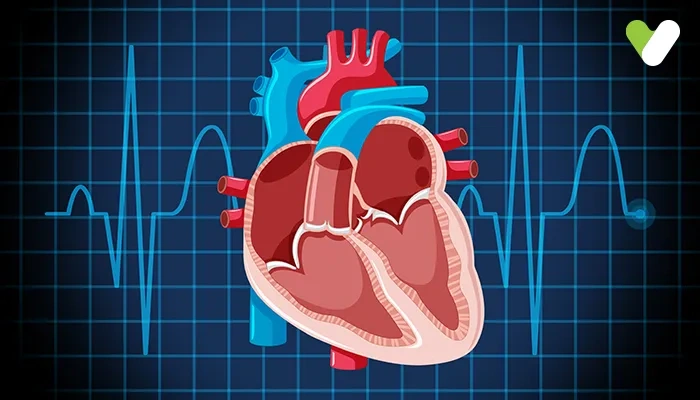
Imagine your body’s main highway for blood flow; that’s the aorta. It's the largest artery in your body, originating from the heart's main pumping chamber (the left ventricle) and arching over to deliver oxygen-rich blood to the rest of the body. Coarctation of the Aorta (CoA) is essentially a "traffic jam" or a narrowing of a segment of this major blood vessel. The term "coarctation" literally means a "tightening" or "constriction."
This narrowing significantly restricts blood flow to the lower part of the body, including the abdomen, legs, and kidneys. To push blood through the constricted area, the heart's left ventricle has to work much harder. This increased effort leads to higher coarctation of aorta blood pressure in the upper body and lower blood pressure in the lower body, a primary sign of this condition.
CoA is a type of congenital heart defect, meaning it’s present at birth. While it's one of the more common congenital heart issues, its severity can vary greatly, influencing when and how it is diagnosed.
What causes coarctation of the aorta?
In most cases, the exact mechanism leading to coarctation of aorta causes remains unknown. It's generally considered a complex congenital defect resulting from a combination of factors, including genetics and environment.
The most accepted theory for the common type of CoA involves the ductus arteriosus. In a fetus, the ductus arteriosus is a temporary blood vessel that shunts blood away from the lungs. It connects the pulmonary artery to the aorta, typically just past where the arteries that supply the upper body branch off.
After a baby is born, this vessel is no longer needed and begins to close. In individuals with CoA, researchers believe that tissue from the closing ductus arteriosus "migrates" or extends into the wall of the adjacent aorta. When the ductus arteriosus closes, the tissue tightens, causing a sharp, shelf-like narrowing in the aorta at or near that point.
While it is most often congenital, rare cases of acquired CoA later in life can result from:
- Traumatic injury to the aorta.
- Severe atherosclerosis (hardening of the arteries).
- A rare inflammatory condition of the blood vessels called Takayasu arteritis.
The congenital nature of the condition suggests a genetic component, as it can run in families, and it's also frequently associated with certain genetic syndromes, such as Turner syndrome.
What are the symptoms of coarctation of the aorta?
The coarctation of aorta symptoms a person experiences depend largely on the severity of the narrowing and their age at diagnosis. Mild coarctation can be asymptomatic for years, even into adulthood, while severe cases cause life-threatening issues shortly after birth.
Symptoms in Infants
When the narrowing is severe, infants often become critically ill once the ductus arteriosus closes (typically a few days after birth). Symptoms are signs of the heart struggling and the lower body not getting enough blood:
- Difficulty breathing or rapid breathing.
- Poor feeding and failure to gain weight.
- Irritability or excessive sleepiness.
- Pale or gray skin (a sign of poor circulation).
- Signs of heart failure or shock, requiring immediate medical attention.
Symptoms in Older Children and Adults
Also known as mild coarctation, it is only discovered during a routine physical exam. When symptoms do occur, they are typically related to the difference in blood pressure and poor circulation to the lower body:
- High blood pressure in the arms (often the first and only sign).
- Headaches or frequent nosebleeds (due to high blood pressure in the upper body).
- Leg cramps or pain in the legs with exercise (known as claudication), when the muscles aren't getting enough oxygenated blood.
- Cold feet or a noticeable difference in temperature between the upper and lower body.
- A distinct, harsh coarctation of aorta murmur may be audible with a stethoscope, often over the back.
It is necessary to note that anyone diagnosed with high blood pressure, especially at a young age, should be checked for CoA.
What is Isolated CoA & its causes?
Isolated Coarctation of the Aorta refers to the condition when it occurs as a standalone defect, without any other significant congenital heart defects. This is distinct from CoA that is part of a more complex structural heart problem.
The primary cause of Isolated CoA is the same as the general mechanism: the migration and subsequent constriction of tissue from the closing ductus arteriosus. The narrowing typically happens in a discreet, shelf-like manner just distal to the left subclavian artery, after the last artery supplying the upper body branches off.
While it's considered "isolated," patients may still have minor, less complex associated anomalies, most commonly a bicuspid aortic valve, which is an aortic valve with only two cusps instead of the usual three. The key distinction is the absence of major additional defects like a large ventricular septal defect (VSD). Isolated CoA generally has the most favorable prognosis once successful coarctation of aorta treatment is performed.
What are the complications of Coarctation of the Aorta?
If left untreated, CoA can lead to serious, life-threatening complications. These arise from the heart, constantly working against the high resistance and the effects of abnormal blood flow and coarctation of aorta blood pressure.
- Heart Failure: The left ventricle is forced to pump harder to push blood through the narrowed aorta. Over time, the muscle wall thickens and weakens, eventually leading to heart failure.
- Persistent High Blood Pressure (Hypertension): This is one of the most common and dangerous long-term complications. The hypertension can be severe and affects the blood vessels throughout the body, even after the physical narrowing is repaired. This increases the risk of stroke and kidney damage.
- Aortic Aneurysm and Dissection: The aorta wall, especially just before and after the coarctation site, is under immense stress. This can lead to a weakened, bulging area (aneurysm) or a life-threatening tear in the inner lining of the aorta (aortic dissection).
- Cerebral Aneurysms: High pressure in the upper body can weaken blood vessel walls in the brain, causing a bulging (aneurysm) that risks rupture and a hemorrhagic stroke.
- Premature Coronary Artery Disease: High, long-standing blood pressure accelerates the buildup of plaque in the arteries supplying the heart muscle.
- Recoarctation: The narrowing can return after a surgical or catheter-based repair, requiring further intervention.
These complications underline why early diagnosis and timely coarctation of aorta treatment are so critical.
How do doctors diagnose this condition, coarctation of the aorta?
Diagnosing CoA often begins during a routine physical examination, either shortly after birth or during a childhood check-up. The physical findings of abnormal coarctation of aorta blood pressure and pulses are key.
- Physical Examination
- Blood Pressure Discrepancy: The most telling sign is a significant difference between the blood pressure measured in the arms (high) compared to the legs (low).
- Pulse Checks: The pulse in the femoral artery (groin) or feet will often be noticeably weaker or delayed compared to the pulse in the arms or neck. In severe cases, the pulse may be absent entirely.
- A Heart Murmur: A physician may hear an unusual swishing or whooshing sound, a coarctation of aorta murmur, due to turbulent blood flow through the narrow section.
- Diagnostic Imaging and Tests
Once CoA is suspected, a cardiologist will order specific tests to confirm the diagnosis and assess the severity:
- Echocardiogram (Echo): This uses sound waves to create a moving picture of the heart and aorta. It's the most common initial test, allowing the doctor to visualize the narrowed segment, measure the pressure gradient, and check for associated defects like a bicuspid aortic valve.
- Electrocardiogram (ECG or EKG): This test checks the heart's electrical activity. It may show signs of Left Ventricular Hypertrophy (thickening of the heart muscle) due to the increased workload.
- Chest X-ray: May show an enlarged heart or a specific contour of the aorta known as the "3 sign" or "E sign," caused by the pre- and post-coarctation dilation.
- Cardiac Magnetic Resonance Imaging (MRI) or Computed Tomography (CT) Scan: These advanced imaging techniques provide detailed, 3D pictures of the aorta, allowing doctors to precisely measure the length and severity of the narrowing, check for collateral blood vessels, and detect aneurysms.
- Cardiac Catheterization: This invasive procedure involves inserting a thin tube (catheter) into a blood vessel and guiding it to the heart and aorta. It directly measures the pressure difference across the coarctation and can be used for both diagnosis and treatment.
What conditions are associated with coarctation of the aorta?
CoA rarely occurs in complete isolation. It is frequently found alongside other congenital heart defects, which can affect the overall coarctation of aorta types and complexity of the condition.
The most common associated condition is a Bicuspid Aortic Valve (BAV), found in up to 85% of people with CoA. A BAV has two leaflets (cusps) instead of the normal three, which can lead to issues like aortic stenosis (narrowing) or regurgitation (leakage) later in life, even after the coarctation is fixed.
Other common associated defects include:
- Ventricular Septal Defect (VSD): A hole between the heart's lower chambers.
- Patent Ductus Arteriosus (PDA): The ductus arteriosus fails to close after birth, creating an abnormal connection between the aorta and pulmonary artery.
- Subaortic Stenosis: Narrowing below the aortic valve, restricting blood flow out of the left ventricle.
- Mitral Valve Abnormalities: Issues with the valve between the left upper and lower chambers.
- Shone Complex: A rare combination of several obstructive left-sided heart lesions, including CoA, BAV, subaortic stenosis, and a parachute mitral valve.
How is coarctation of the aorta treated?
The good news is that coarctation of aorta treatment is highly effective, but it almost always requires an intervention to physically relieve the obstruction. The specific method chosen depends on the patient's age, the severity of the coarctation, and any associated heart defects.
1. Initial Stabilization (Critical Neonates)
For newborns showing shock due to a severe coarctation:
- Prostaglandin E1 (PGE1) Infusion: This medication is given intravenously to reopen the ductus arteriosus. Reopening this fetal vessel provides a temporary pathway for blood to bypass the coarctation and reach the lower body, stabilizing the infant until definitive repair can be performed.
2. Definitive Repair Options
Surgical Repair (Often preferred for infants and young children)
Surgery involves opening the chest to access the aorta and physically removing or bypassing the narrowed segment.
- Resection with End-to-End Anastomosis: The most common surgical method. The narrowed segment is cut out (resected), and the two healthy ends of the aorta are sewn back together. This minimizes the risk of recoarctation.
- Subclavian Flap Aortoplasty: A portion of the left subclavian artery (the vessel supplying the left arm) is used to patch and widen the narrowed section of the aorta.
- Patch Aortoplasty: A piece of synthetic material is used to patch and widen the narrowed area.
Catheter-Based Intervention (Angioplasty and Stenting)
This is often preferred for older children, adolescents, adults, or for re-narrowing (recoarctation) after previous surgery.
- Balloon Angioplasty: A thin, flexible tube (catheter) with a tiny balloon at its tip is threaded through a blood vessel (usually in the leg) up to the narrowed area. The balloon is briefly inflated to stretch and open the coarctation.
- Stent Implantation: After balloon angioplasty, a small mesh tube called a stent may be left in place to keep the aorta open and prevent it from narrowing again. Stenting is a common and highly effective part of adult coarctation of aorta treatment.
3. Medical Management
Medication is essential, both before and after the repair:
- Anti-hypertensive Medications: Essential for controlling high coarctation of aorta blood pressure, which may persist even after a successful repair.
- Medication for Heart Failure: Used to manage symptoms and support the heart muscle if heart failure develops.
When should I see a doctor or Cardiologist?
If you suspect you or your child may have a heart issue, prompt medical attention is vital. You should see a doctor or cardiologist if you notice any of the following:
- In an Infant: If your baby is having trouble breathing, is feeding poorly, has noticeably pale or gray skin, or is excessively sleepy and difficult to arouse. These are urgent signs.
- In an Older Child/Adult: If you or your child is diagnosed with high blood pressure, especially if it's resistant to medication or diagnosed at a young age.
- Any Age: If you experience frequent headaches, unexplained nosebleeds, or feel leg pain or cramping after mild exercise.
- Routine Follow-up: If you have already been diagnosed with CoA and had a repair, it is absolutely essential to maintain lifelong follow-up appointments with a cardiologist experienced in congenital heart disease. They will monitor your coarctation of aorta blood pressure, check for recoarctation, and monitor your aortic valve and overall heart function.
What is the life expectancy?
The outlook for individuals with CoA has dramatically improved thanks to advancements in diagnostic tools and coarctation of aorta treatment techniques.
In the past, without treatment, the average life expectancy was tragically short, often only about 35 years old. However, for those who receive a timely and successful repair, the life expectancy is now significantly better, often nearing that of the general population.
Despite a successful repair, it is a lifelong condition that requires continuous management and monitoring. The biggest long-term risk remains hypertension and the potential for recoarctation or complications at the repair site. Lifelong follow-up with a congenital heart disease specialist is non-negotiable to manage these risks and ensure the best possible long-term health and quality of life. Regular check-ups, blood pressure management, and a heart-healthy lifestyle are the keys to a long, active, and fulfilling life after CoA repair.
Key Takeaways
CoA is a manageable congenital heart condition. Here are the key points to remember:
- What It Is: Coarctation of the Aorta is a narrowing of the aorta, the body's main artery, which is typically present at birth.
- The Primary Signs: The defining feature is a large difference in coarctation of aorta blood pressure between the arms (high) and legs (low).
- The Causes: Primarily a congenital defect, with the most common mechanism involving tissue from the closing ductus arteriosus.
- Symptoms: Range from life-threatening heart failure in newborns to silent hypertension or leg pain during exercise in adults. A coarctation of aorta murmur may also be heard.
- Treatment: Requires intervention—either surgical repair or catheter-based balloon angioplasty and stenting. Coarctation of aorta treatment is highly effective.
- Lifelong Care: Patients require lifelong monitoring by a cardiologist to manage hypertension, check for recoarctation, and monitor for other long-term complications