
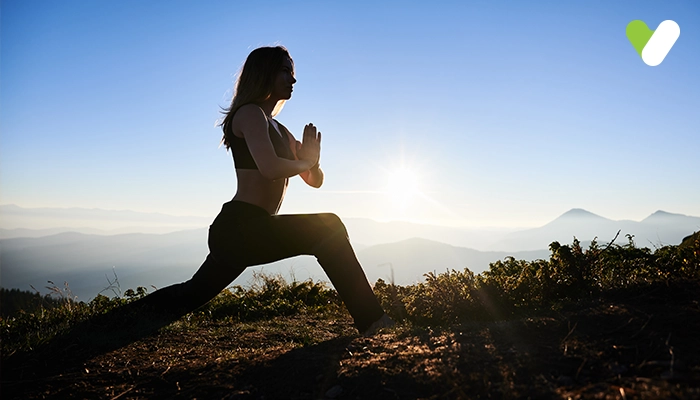
Whether you are seeking a vigorous physical workout or a gentle practise for relaxation and restoration, there are different types of yoga styles suited to your needs. Find the yoga style that aligns with your body, mind, and spirit, and experience the transformative power of this ancient practise. This page explores the rich tapestry of yoga styles, where you will discover different types of yoga practises that cater to various preferences and goals. With a wide range of yoga styles available, you can choose the kind of yoga that resonates with you and supports your journey towards balance, harmony, and self-realisation.
Origin of Yoga
The word 'yoga' originates from the Sanskrit term 'yuj', which translates to 'union'. Its earliest mention can be found in the Rig Veda, an ancient text. Yoga's roots can be traced back more than 5,000 years to northern India. Over the centuries, this ancient practise has evolved and flourished, offering profound advantages for the body, mind, and spirit to those who embrace it. During the late 1890s, Indian monks began sharing their profound knowledge of yoga with the Western world. These teachings introduced the different yoga styles, practises, and poses to a broader audience. By the 1970s, modern yoga had gained significant popularity in Western countries, leading to its widespread adoption and continuous growth.Understanding Yoga
Yoga, the art of living well, encompasses all aspects of our lives, including physical, mental, emotional, and spiritual well-being. By incorporating different types and styles of yoga into our routine, we can find balance and harmony within ourselves. Through practising yoga poses (asanas), engaging in breathing exercises (pranayama), and embracing meditation, one can unite and align their body, mind, and emotions. This comprehensive approach to yoga offers numerous benefits, improving the physical health while equipping individuals with effective tools to manage stress and overcome mental challenges. By integrating yoga into our daily lives, we can experience a healthier and more fulfilling existence, fostering inner peace and overall well-being.Benefits of Yoga
Yoga offers powerful mental and physical healing benefits, working on the principles of harmony and integration. The benefits of yoga vary for each individual, as the practise has unique effects on different people. Yoga provides a wide range of benefits, including:- Increased muscle strength
- Improved flexibility
- Better posture
- Enhanced spine health
- Increased blood flow
- Reduced stress
- Improved balance
- Better sleep
- Peace of mind
- Boosted self-esteem
- Promotion of a healthy lifestyle
- Improved focus
- Boosted immunity
Exploring Different Types of Yoga Styles and Poses
Yoga has evolved into various styles, each focusing on different aspects such as exercise, strength, flexibility, and breathing. These different kinds of yoga styles offer a wide range of physical and mental benefits, allowing practitioners to enhance their overall wellbeing. Let's dive into some of these yoga styles and their unique characteristics:- Ashtanga Yoga Ashtanga Yoga is a traditional form of yoga that gained popularity in the 1970s. It incorporates ancient teachings and focuses on a specific sequence of postures combined with rapid breathing.
- Bikram Yoga Bikram Yoga, commonly referred to as 'Hot' Yoga, involves performing a series of 26 poses and two breathing exercises in a heated room with temperatures reaching approximately 105˚ C and 40% humidity. This practise provides a demanding and rigorous experience for practitioners.
- Hatha Yoga Hatha Yoga is a broad term that encompasses any yoga style that focuses on physical postures. It serves as an introductory practise for beginners, providing a gentle introduction to fundamental yoga poses while establishing a solid foundation for further advancement in the practise.
- Iyengar Yoga Iyengar Yoga places a strong emphasis on proper alignment and uses various props such as blankets, pillows, and chairs to ensure correct posture in each pose. It is suitable for practitioners of all levels and is often used for therapeutic purposes.
- Jivamukti Yoga Jivamukti Yoga emerged in 1984 and combines physical postures with spiritual teachings and practises. It emphasises the flow between poses and explores yoga scriptures, chanting, meditation, pranayama (breathing exercises), and music.
- Kripalu Yoga Kripalu Yoga emphasises the importance of self-acceptance and self-awareness. It encourages practitioners to tune into their bodies and engage in the practise at their own pace and level.
- Kundalini Yoga Kundalini Yoga aims to awaken the dormant spiritual energy within the body. It involves dynamic movements, chanting, meditation, and breathwork to release energy blockages and promote spiritual growth.
- Power Yoga Power Yoga, developed in the 1980s, is a dynamic and physically demanding form of yoga influenced by Ashtanga Yoga. It focuses on flexibility, strength, and endurance, combining flowing sequences with challenging poses.
- Sivananda Yoga Sivananda Yoga follows a five-point philosophy that includes relaxation, proper breathing, exercise, diet, and positive thinking. Classes typically include the same 12 basic poses, along with variations, and may incorporate Surya Namaskar (Sun Salutation) and savasana (final relaxation).
- Adaptation Yoga Adaptive Yoga is a practise that can be tailored to accommodate individuals of all physical abilities. Teachers undergo specialised training and have expertise in anatomy and yoga therapy to cater to the unique needs of each practitioner.
- Yin Yoga It is a calming and meditative practise, also known as Taoist yoga. It focuses on releasing tension in major joints and connective tissues, promoting deep relaxation and flexibility.
- Prenatal yoga Prenatal Yoga is specifically designed for pregnant women, using modified poses to support the physical and emotional changes experienced during pregnancy. It can help maintain fitness, ease discomfort, and prepare for childbirth.
- Relax Yoga Restorative Yoga is a gentle and relaxing form of yoga that involves holding simple poses supported by props such as bolsters and blankets. It promotes deep relaxation and rejuvenation, allowing the body and mind to unwind.
Four Main Yoga Paths
The paths of yoga refer to different philosophical approaches or spiritual paths within the broader yoga tradition. These paths guide individuals in their journey towards self-realisation and spiritual growth.- Karma Yoga Karma yoga is the path of selfless work and devotion. It involves dedicating energy, time, and effort to tasks without expecting any reward or recognition. The practise is humbling, as it focuses on working for the collective good rather than for personal gain.
- Jnana Yoga Jnana yoga is the path of practical wisdom and intellectual knowledge. It centres on attaining self-realisation through the practice of mindful awareness. Through stages of hearing, thinking, and meditating, individuals acquire wisdom and cultivate intuitive insight, enabling them to differentiate between the ego and the authentic essence of their being.
- Raja Yoga Raja yoga, also called ‘yoga of the mind’ or ‘classical yoga’, is often referred to as ashtanga yoga. It consists of eight steps, including principles (Yama), personal discipline (niyama), postures (asana), breathing practises (pranayama), withdrawal (pratyahara), concentration (dharana), meditation (dhyana), and salvation (samadhi). Raja yoga emphasises the perfection of asanas over time and includes various breathing exercises to combat stress and promote overall wellbeing.
- Bhakti Yoga Bhakti yoga is the path of devotion and love towards a higher power. It involves worshipping or loving God, aiming to unite the individual's soul (atman) with the divine (Brahman). Different types of bhaktis are followed, such as those seeking liberation, material wealth, knowledge, or self-awareness, depending on the individual's chosen path of devotion.
Potential Risks of Yoga
While yoga is generally considered safe, it is important to be mindful of certain risk factors before you start a practise.- It is rare to experience serious injuries during yoga, with sprains and strains being the most common.
- Pregnant individuals or those with underlying medical conditions such as glaucoma, bone loss, or sciatica should consult a doctor before beginning yoga.