
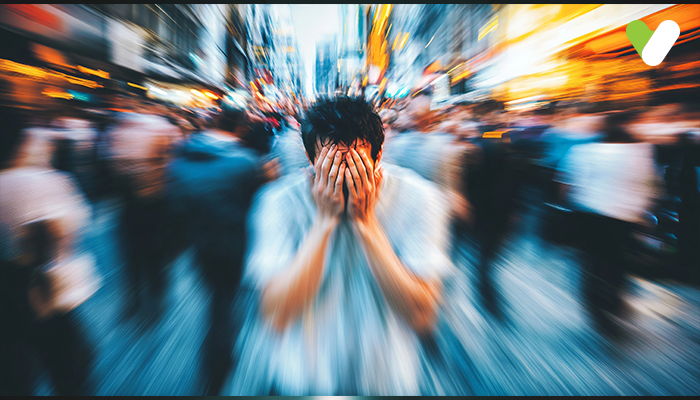
Social anxiety disorder is considered to be one of the most prevalent mental disorders that significantly influences the interaction of the individual with other individuals. It is not just nervousness in the run-up to an important event, but the trauma of feeling judged, embarrassed or negatively rated in social or performance events. Eating out, chatting in a cafe or even attending a party may be a nightmare for those with this condition.
It is important to understand what social anxiety disorder is, since its awareness helps to break the stigma and foster support and direct people towards the right treatment. Contrary to shyness, which is interim and light, social anxiety disorder is permanent and can interfere greatly with personal, academic and professional life.
Read More: Anxiety Disorder - Its Types, Causes, Symptoms & Treatment
What Is Social Anxiety Disorder?
Social anxiety disorder, also known as social phobia, is a mental disorder that is accompanied by extreme fear of socialization. Individuals tend to shun out of situations that they feel might embarrass them or might make them feel embarrassed. Mental health organization claim that this disorder is among the most widespread anxiety disorders in the world, and it afflicts millions of people of diverse cultures and age brackets.
Read More: Symptoms Of Phobia And Its Types
The disorder typically onset during adolescence but may occur during childhood or adulthood. Although some social discomfort is the norm, the symptoms of social anxiety disorder are significantly more intense and persistent, as well as disrupting performance in everyday life.
Symptoms of Social Anxiety Disorder
Social anxiety disorder symptoms may be physical as well as emotional. It is very important to identify them at an early stage to seek help.
Emotional and Behavioural:
- Extreme reservations about communicating with strangers.
- Fear of embarrassment, rejection, or judgment.
- Eschewing social or performance.
- Problem with eye contact.
- Unceasing self-awareness every day.
Physical Symptoms:
- Blushing, sweating or trembling.
- Salient: fast heartbeat or nausea before social.
- Muscle tension.
- Dizziness or shortness of breath.
The symptoms of this social anxiety disorder are different in different people. Some of them might have a bit of discomfort in small environments, whereas others can have a problem in almost every aspect of life.
Social Anxiety Disorder Causes
The precise mechanisms behind these are complicated, usually consisting of a combination of biological, psychological and environmental factors.
- Genetic Factors - It has been proposed that social anxiety disorder is familial, but it is not caused by a single gene.
- Brain Structure - An overactive or highly reactive amygdala, the fear-processing section of the brain, could be one of the factors that lead to a hyperactive anxiety reaction.
- Environmental Factors - Traumatic experiences, being bullied during childhood or having an overly critical parent may predispose someone to be vulnerable.
- Personality Traits -Naturally, shy or inhibited persons could be predisposed towards the development of the disorder.
It should be remembered that these causes are risk factors, but not all people exposed to them acquire the disorder.
Do Social Anxiety Disorder and Shyness Share the Same?
Shooting an arrow at someone who has social anxiety disorder is one of the most frequent misunderstandings. Shyness is a character trait characterized by moderate unease during new social experiences, and this normally disappears as individuals get used to it.
Conversely, social anxiety disorder is more intense. It is characterized by excessive fear, incessant avoidance and great interference with life. Whereas the shyness would be nervous when presenting a presentation, someone with a social anxiety disorder can simply skip school, work, or relationships to avoid such experiences.
Physical Health/Social Anxiety Disorder
Although the condition is psychological, it may also have an impact on the body. Cortisol levels caused by chronic stress and anxiety can weaken the immune system and expose one to heart issues. Studies also indicate that social anxiety disorder is connected to such conditions as digestive disturbances, sleeping problems, and headaches.
Therefore, the symptoms of social anxiety disorder do not stem from the mind alone; they can extend their impacts to the general well-being.
Is Social Anxiety Disorder an affliction that only affects talking in public?
The other myth is that the disorder is associated with just stage fright or speaking in front of an audience. Although an oratorical appearance in front of the crowd is the trigger, the disorder is quite a general case:
- Meeting new people.
- Eating or drinking in public.
- Using public restrooms.
- Being at social parties.
- Contributing to group discussions.
Even the most ordinary experience, such as answering the phone, can cause anxiety to some. It is not, therefore, restricted to performance environments.
Do Children have Social Anxiety Disorder?
Yes, this condition can be developed by children, too. Symptoms can be present as early as the age of 8. In children, the child may stick to parents too much, refuse to attend school or not want to participate in group activities. These behaviours do not resolve on their own, and in many cases, they continue and get worse.
Identification of child-based symptoms of social anxiety disorder at the initial stages supports providing parents and educators with the appropriate guidance to avoid academic and friendship challenges in the short term.
Treatments of Social Anxiety Disorders
Treatment of social anxiety disorder is centred on minimizing fear, enhancing coping mechanisms, and enabling individuals to lead a good life.
Psychotherapy
The most suggested is cognitive-behavioural therapy (CBT). It assists patients in questioning their irrational fears and to approach them progressively using the exposure methods.
Read More: Top 9 Benefits Of Cognitive Behavioural Therapy
Social Skills Training
This assists individuals in building communication tactics, assertiveness and confidence in social settings.
Relaxation Practices
Mindfulness, meditation, and breathing exercises alleviate stress and control physical symptoms.
Support Groups
Being able to share with other people who have been through the same experiences can help in motivating and lessening loneliness.
Social Anxiety Disorder Medication
In other instances, psychiatrists can prescribe medicines in addition to therapy. Such drugs are usually prescribed to manage mood and decrease the effects of anxiety. It is imperative to keep in mind that medication for social anxiety disorder is not treatment but, in a larger plan, may be an efficient component of treatment. There must be no such decision as to take or not to take medication without professional advice.
Recovery-Supportive lifestyle changes
Lifestyle changes are also very vital in the management of the disorder, besides therapy and prescription of medications.
- Routine Exercise: Exercise reduces stress hormones and elevates mood.
- Balanced Diet: Appropriate nutrition helps in the health of the brain and lessens fatigue.
- Sleep Hygiene: A sufficient amount of sleep normalises mood, and it decreases anxiety stimulators.
- Mindfulness Practices: Journaling, yoga, and meditation facilitate self-awareness.
- Avoiding Stimulants: It is possible to decrease stress by consuming less caffeine or alcohol.
Yes, social anxiety disorder can be treated using lifestyle changes, which are particularly effective when combined with professional care.
Social Anxiety Disorder
It is hard but not impossible to live with this condition. The process of developing resilience is a process that takes time, compassion towards oneself, and continued encouragement. Inmates with the disorder must not be ashamed; they should seek help, as it is a sign of strength and not weakness. Through appropriate social anxiety disorder interventions and coping mechanisms, one may gain confidence and be involved in activities that he/she would have previously shunned.
Historical and Awareness of Social Anxiety Disorder
The identification of social anxiety disorder as a psychiatric disorder is not that old. In the past few decades, individuals who could not cope with the existing fear of being in a social set-up were simply considered as shy people, introverts or too sensitive. Only in the late 20th century, mental health professionals officially introduce it as a separate disorder. This was a change that gave visibility and legitimacy, that saw people pursue the right social anxiety disorder treatment instead of sidelining their plight as personal faults.
The historical development of terms also indicates the way we have increased in knowledge. Although the older literature used to call such a condition social phobia, now the term is defined as a broader concept, which involves physical, emotional and behavioural symptoms that last long and appear in a variety of environments.
Lifestyle Social Anxiety Disorder - Real Time Examples
To have a more insightful idea of what social anxiety disorder is like, it is useful to consider actual life situations.
Case example 1: A student at a university fears group discussions. Although she has the answers, she does not dare to speak out because she is afraid of her fellow students laughing at her. Gradually, her performance goes down, and she is lonely.
Case example 2: A young professional does not attend a team lunch or other after work events. His colleagues believe that he is rude; however, in actuality, he has the symptoms of social anxiety disorder, including sweating, trembling, and nausea in those cases.
Case Example 3: A child will not come to a birthday or school play; instead, he or she sticks with the parent. The teachers can wrongly attribute this to stubbornness, but it could be the initial stages of social anxiety disorder.
These instances depict the impact of the condition on education, career, and interpersonal relationships in relation to different ages.
Non-Therapy Coping
Although therapy and medication for social anxiety disorder are vital, self-help strategies enable the person to cope with everyday issues. Some coping methods include:
Slow Progression - You can begin with simple activities like welcoming a neighbour and gradually advance to activities that are more difficult, like participating in meetings.
Breathing Exercises - Deep, slow breathing can relax the nervous system, and it can be used to alleviate panic.
Positive Visualization - Visualizing success in the events ahead of a social situation can lessen anticipatory anxiety.
Journaling - Writing triggers, thoughts, and progress helps a person to be self-aware.
Role-Playing - rehearsing anything, a conversation or a presentation with a good friend, gives confidence.
These measures do not exclude professional treatment but can enhance a recovery and make the treatment more efficient.
Social and Family Support
Family members are very important in the recovery. Rather than forcing people into dreaded circumstances, families can promote small steps without being judgmental. Even basic gestures can be used to encourage the individual to remain dedicated to therapy, like joint therapy sessions or rewarding accomplishments.
Awareness of the community is also important. Schools, workplaces, and social groups should notice symptoms of social anxiety disorder, as this can lead to the creation of more inclusive environments. Minor shifts, such as permitting other types of involvement in the classroom or providing a more fluid style of communication in the workplace, can make a substantial difference.
Conclusion
Knowledge about what social anxiety disorder is extends beyond definitions, but rather includes putting yourself in their shoes as they face the disorder in their daily lives. This is in contrast to isolated cases of nervousness because the condition is chronic and may severely affect an individual in terms of personal development, learning, and employment.
With the identification of the symptoms of social anxiety disorder, the campaign to deal with causative factors and the implementation of sound social anxiety disorder remedies, individuals can make enormous progress. A combination of therapy, potential medication for social anxiety disorder and supportive lifestyle changes will provide a holistic route to recovery.
In the end, it is evident what is said: social anxiety disorder is no weakness but a medical condition that is worth paying attention to and showing mercy. People can get rid of fear, regain confidence in their social life with knowledge, encouragement, and appropriate care.