

Staying healthy is a conscious choice. You need to take steps to stay fit and healthy and miles away from medical emergencies. While you may take all the precautions, you cannot predict or avoid health scares altogether. A health issue can lead to substantial expenses that you can drain away your lifelong savings. However, you can secure your finances by investing in health insurance. Read on to learn about the different types of health insurance plans available in India.
What is Health Insurance and the Different Types of Health Insurance Policies in India
A health insurance policy is a contract between an insurance company (insurer) and an insured party (insured). Under the agreement, the insurer agrees to cover the medical costs accrued by the insured up to a specific sum insured. The insurer pays for various medical expenses like hospitalisation costs, surgeon fees, diagnostic tests, etc., based on the type of health insurance policy chosen by the insured, which could be any of the following.- Indemnity-Based Health Plans
- Individual Health Insurance
- You get an individual sum insured for each beneficiary covered under individual health insurance, including your spouse, children, and parents.
- You can customise your policy by adding add-on riders, but you have to pay extra for each additional rider you choose.
- Insurers typically offer free health check-up facilities under this type of medical insurance plan to help you choose a suitable policy for yourself and your family.
- You can easily port your policy to another insurer without losing your policy's benefits.
- It is an independent plan not affected by third-party variables as it is exclusive to you.
- Family Floater Health Insurance
- Such plans simplify the maintenance of health insurance for all family members in one place.
- You get higher sums insured at a cost-effective premium while covering multiple beneficiaries.
- The coverage is generally extended to immediate family members like spouses, children, and parents.
- Insurers typically offer add-on riders like restoration benefits to restore the exhausted sums insured.
- Insurers conduct a collective profile evaluation of all family members to determine the premium payable.
- Senior Citizen Health Insurance
The premiums for senior citizens' health insurance policies are typically higher as seniors are more prone to illnesses.
Such policies have lower waiting periods as compared to most other medical insurance plans.
Senior citizens or their family members purchasing senior citizen health insurance plans can avail of annual tax deductions of up to ₹ 50,000 on premiums under section 80D of the Income Tax Act.
Seniors need to undergo a pre-policy medical check-up before purchasing these types of health insurance plans.
You can add a critical illness cover as an add-on benefit to treat life-threatening diseases.
- Group Health Insurance
- There is no waiting period, and you can file an insurance claim soon after you are employed.
- In some cases, this policy covers your dependents like parents, spouses, and children.
- The policy covers you against all standard expenses covered under a general health insurance policy.
- Employers incur lower premiums on group health plans as they are collective plans for employees.
- You are covered under this type of health insurance policy only until you stay employed with an organisation.
- Maternity Health Insurance
- Such a plan covers expenses starting from prenatal care and delivery to postnatal stages.
- The waiting period for maternity health coverage is typically lengthy ranging from nine months to a few years.
- Most insurers typically cover up to two deliveries under the policy.
- The minimum and maximum age for expectant mothers to avail of coverage under this type of health insurance plan are 18 and 45 years, respectively.
- The policy covers new-born babies against the cost of vaccinations during the initial years.
- Top-Up Health Insurance
- You can easily convert top-up plans into basic medical insurance plans.
- This policy covers all kinds of medical expenses covered under a standard health insurance plan.
- You typically have to pay a fixed deductible to obtain top-up benefits.
- You can upgrade to a super top-up health plan by paying a higher premium and obtain a higher sum insured.
- As top-up health plans provide additional coverage over the base plan, they are commonly available as add-on riders.
- Definite-Benefit Health Plans
- Personal Accident Insurance
- You get family support to compensate for the loss of income stability after an accident.
- You do not have to provide medical tests to file a claim.
- The policy covers the legal and funeral expenses depending on the accident's impact.
- You can get 24*7 assistance for instant claim support with this type of health insurance policy.
- You can buy it as a standalone plan or include it as a cover in individual or family floater policy.
- Hospital Daily Cash
- Insurers provide a predetermined, fixed amount for daily hospital expenses.
- In the case of a built-in feature in medical insurance, insurers offer coverage as a percentage of the sum insured.
- Hospital daily cash benefits are available for 15 to 45 days and may vary from insurer to insurer.
- You can get coverage for inadmissible expenses like X-Ray charges, surgical accessories, family visiting fees, etc.
- You do not need to provide bills if you are hospitalised for over 24 hours to enjoy daily cash benefits.
- Some insurers may cover the expenses associated with the recovery process.
- Critical Illness Insurance
- The policy terminates after the one-time lump sum payment of the sum insured.
- You can use the sum insured to pay for any and all medical expenses based on the treatment course.
- You can file a claim after 30 days of receiving a critical illness diagnosis.
- You must comply with the pre-medical check-ups requirement, including age limits determined by insurers.
- The policy has a lifetime renewability option for convenient continuity.
Tips For Choosing the Best Types of Health Insurance Plans
You can also follow these practices to narrow down the best types of medical insurance policies for you and your family.- Evaluate the insurance company's reputation, claim settlement ratio and customer service provisions.
- Calculate your affordability against the desired benefits.
- Understand your needs in terms of coverage, sum insured, and additional benefits.
- Compare insurance quotes by visiting the insurers' websites and studying their terms.
- Check the insurer's network hospitals to avail of the cashless claim facility.
- Look for the lifetime renewability feature available in specific policies.
- Access the policy's inclusions and exclusions to set your expectations right.
- Check the no claims bonus percentages for a higher sum insured benefit.
Why is a Health Plan better than Health Insurance?
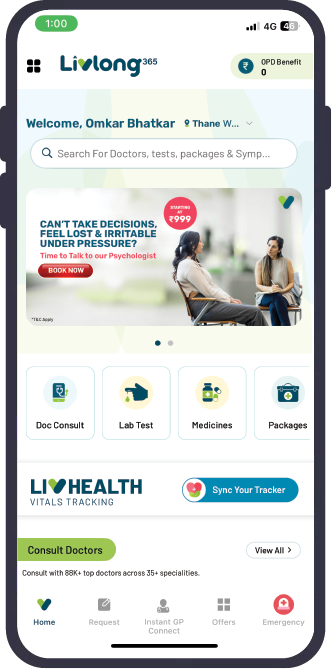
Traditional Health Insurance generally covers Hospitalization expenses when admitted for over 24 hours. LivLong Health Plan on the contrary covers not just hospitalization expenses (powered by IRDAI approved Insurer) but also expenses around Doctor consultations, lab tests, pharmacy, and more, providing much higher value for money.