
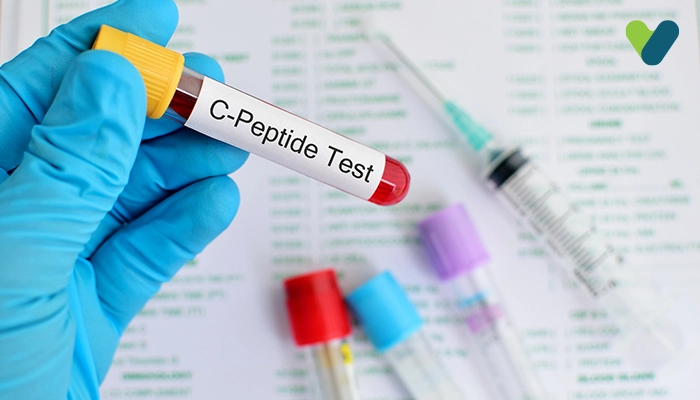
Treatment of diabetes needs profound knowledge of the way the body manufactures and utilises insulin. The C-peptide test is one of the most essential tests, which assist diabetologists in the vision of the insulin production. The C-peptide test is not as famous as blood sugar one; however, it offers necessary information about the functioning of the pancreas and the possibility of the body producing insulin. Within this article, we take a look at the C-peptide test, its working mechanism, its necessity, and the meaning of the results to the people with various forms of diabetes.
Also Read: Diabetes: Meaning, Types, Symptoms & Treatment
What is the C-Peptide Test?
The C-peptide test for diabetes is used to determine the amount of C-peptide in the blood. C-peptide is a small segment of protein that is discharged into the blood as insulin is produced. The pancreas produces insulin, and the first large molecule is named proinsulin. This pro-insulin is broken down into insulin and C-peptide, which is discharged into the blood in equal proportions.
C-peptide is a good measure of the amount of insulin naturally produced in your body because C-peptide stays longer in the blood as compared to insulin. The level of C-peptide enables the doctor to distinguish between the various forms of diabetes, in addition to evaluating the pancreatic functionality with greater precision when compared to insulin alone.
The C-peptide test definition does not rely on a basic test of blood. It also shows whether your pancreas is generating enough insulin, which will be critical in the diagnosis of the type of diabetes and the treatment plans.
Also Read: Top 11 Diabetes Signs & Symptoms You Should Know
Importance of C-Peptide Test in Diabetes
The C-peptide blood test is critical in the management of diabetes due to the following reasons:
Diabetes Type 1 and Type 2: the difference between the two.
Type 1 diabetics typically have a very low or nonexistent quantity of C-peptide since the immune system attacks beta cells that produce insulin within the pancreas. Conversely, normal or elevated levels of C-peptide are common in Type 2 diabetes patients because their bodies produce insulin but are unable to utilize it effectively due to insulin resistance.
The level of C-peptides can be used to determine whether a patient needs insulin treatment or not. It also assists in avoiding misdiagnosis among adults who develop Type 1 diabetes in their later life, which is also known as LADA (Latent Autoimmune Diabetes in Adults).
Evaluation of Pancreatic Function
The functioning of the pancreas can be found out by the C-peptide test, fasting or following a glucose challenge. In individuals with diabetes who have just been diagnosed, the test has the potential to save or prove the need to supplement the insulin level in the body using additional insulin.
It is very handy, especially when the blood sugar level does not show the anticipated levels. As an example, an individual can be normal in terms of insulin but have high levels of sugar in the blood. In this case, the amount of C-peptide may show that the level of insulin production is either sufficient or defective.
Follow-Up of Gestational Diabetes
The C-peptide test is also good in pregnancy. Gestational diabetes is a condition in which the body is not able to supply sufficient insulin to meet the heightened requirements of pregnancy. C-peptide levels should also be monitored so that the profession can identify the adequate insulin secretion required to safeguard the mother and the baby.
C-Peptide Tests in Special Populations
C-peptide testing is also useful to adults, as well as children, teenagers and pregnant women. C-peptide in children with newly diagnosed diabetes can distinguish Type 1 and Type 2 diabetes which can determine treatment options early. In pregnant women, C-peptide testing can be used in addition to gestational diabetes in order to identify Type 2 diabetes that was otherwise undiagnosed but manifested in pregnancy. In the case of aged patients, C-peptide tests may indicate whether the beta-cells are working well or not and whether to take medications that stimulate the secretion of insulin or inject exogenous insulin.
Also Read: Best Time To Exercise For Type 2 Diabetes
Fasting vs. Stimulated C-Peptide Tests
The C-peptide test has two major methods which include; fasting and stimulated. They both present useful information albeit in a somewhat different context.
Fasting C-Peptide Test
A fasting C-peptide test is a test that is done to determine the level of C-peptide in blood following an overnight fast. This is an indication of the resting baseline secretion of insulin at rest not affected by a recent food intake.
This is an easy test that is convenient and gives a true image of the baseline functioning of the pancreas. It may also be conveniently used to follow-up individuals with diabetes over a period of time since the persistently low levels of fasting C-peptide could suggest progressive deterioration of the beta-cells.
Also Read: Different Types Of Diabetes
Stimulated C-Peptide Test
A C-peptide test is a stimulated test that is used to determine the amount of C-peptide produced by the pancreas in response to a test glucose in challenge or meal. Oral glucose or intravenous glucose injections can be used to do this. The stimulated test demonstrates the level of responsiveness of the pancreas to stress and assists in measuring the ability to produce insulin in real life scenarios.
Also Read: Intermittent Fasting Diabetes 2
The comparison of fasting and stimulated C-peptide levels can explain whether the pancreas can meet the necessary insulin requirements of the body, and it is critical to personalize the treatment of diabetes.
The unfamiliarity with the NP Level C-Peptide
Normal C-peptide ranges will differ according to the laboratory, testing procedure and the stimulated or fasting test. An average fasting C-peptide level graph indicates that the normal range is 0.8 to 2.0 ng/mL, although the post-stimulation levels may be much greater.
Also Read: 12 Best Foods For Diabetic (Sugar) Patients To Stay Healthy
Low C- Peptide Levels
Low levels of C-peptide would be an indication that the pancreas is not producing enough insulin. This is typical of Type 1 diabetes and the progressive Type 2 diabetes, where the beta-cells are exhausted.
It can also be found in low amounts in patients who are being treated with external insulin since exogenous insulin does not activate the production of C-peptides. Early indication of low C-peptide levels assists the physicians to make amendments to the treatment regimens and forecast the insulin needs in the long run.
Also Read: Normal Blood Sugar Level Chart by Age for Adults
High C-Peptide Levels
There are a number of reasons why high C-peptides may occur. They can be markers of insulin resistance, which is a characteristic feature of Type 2 diabetes. An increased amount of insulin is produced in the pancreas to overcome resistance and resulting in high C-peptide levels.
High C-peptide might also be due to a rare pancreatic tumour (insulinoma) or to a condition that decreases the breakdown (or elimination) of C-peptide, such as kidney malfunction. The knowledge of these causes is vital to the ability to interpret test results in the right way.
Also Read: Diabetes Mellitus - Origin & History
C-Peptide Concentrations and Diabetes Course
The progression of diabetes is of interest in monitoring the level of C-peptide over time. The C-peptide level in Type 1 diabetes will tend to reduce very fast upon diagnosis because the pancreatic beta cells are destroyed. In Type 2 diabetes, the level can be initially high because insulin resistance occurs; however, in later stages of its progression, the level can decline with the worsening of the performance of the beta-cell. Routine testing of C-peptide may allow physicians to predict the insulin requirements, to vary the medication levels and to estimate the possibility of such complications as neuropathy or retinopathy. One can use C-peptide trends to proactively address diabetes and long-term health through tracking C-peptide trends.
Also Read: Diabetic Diet: Discover The Best Food For Diabetic Patients
Typical etiologies of Abnormal C-Peptide Levels
High C-Peptide
Insulin resistance: This happens when the body secretes increasing insulin in order to counter resistance in tissues.
- Obesity: The elevated insulin production following the increased intake of energy and insulin resistance.
- Kidney disease: A decreased clearance of C-peptide in the blood.
- Insulin-secreting tumours (insulinomas): These are rare tumours that overproduce insulin.
Low C-Peptide
- Type 1 diabetes: Destruction of pancreatic beta cells is autoimmune.
- Advanced Type 2 diabetes: Beta cells become progressively unresponsive to the production of insulin.
- Exogenous insulin therapy: Extrinsic insulin inhibits the natural production of insulin and C-peptide.
- Pancreatic surgery or trauma: Beta-cell loss of mass decreases the C-peptide levels .
Also Read: Know How To Monitor Your Diabetes With HbA1c Test
The Non-Pharmacological Factors Which Cause Change in the C-Peptide Levels
There are a number of lifestyle changes that may affect the levels of C-peptide and insulin production. The healthy eating habits, physical activity, and body weight control can advance the sensitivity of insulin and might preclude the overabundance of C-peptides because of insulin resistance. On the other hand, excessive amounts of sugar, lack of exercise, and obesity may pose extra strain on pancreatic beta cells leading to excess insulin secretion and increased levels of C-peptide. Treating these lifestyle issues is both important in treating diabetes as well as in maintaining residual beta-cell functions particularly in patients with Type 2 diabetes .
Also Read: Can We Reverse Diabetes - Myths, Do's And Don'ts
C-Peptide Testing Clinical Significance
C-peptide test does not only give a diagnosis. It allows doctors to:
- Decision on whether insulin treatment should be taken and the dosage.
- Assess remaining beta-cell activity in new diabetic patients.
- Establish the risk of complications of diabetes via insulin production.
- Provide advice on gestational diabetes treatment.
This test is especially useful in patients who cannot be categorized as per the usual diagnostic pattern hence making the treatment to be based on their individual requirements.
Also Read: Ogtt Diabetes - All You Need To Know
C-Peptide in combination with Other Tests
Even though the C-peptide test provides significant data regarding the production of insulin, an integration of this test with other laboratory tests provides a holistic perspective on the management of diabetes. Interpreted blood glucose levels, HbA1c, and lipid profiles give an insight on glycemic control, cardiovascular risk, and pancreatic functioning. Such a comprehensive method enables medical workers to adapt to the treatment options, improve medication utilisation, and recognise individuals who are at risk of complications more. Differentiating therapy with several markers is the guarantee of its individualised and efficient application in the situation of a particular patient.
Also Read: Best Diabetic Patient Food Chart To Control Blood Sugar
Indications of When to Test C-Peptides
The following are some situations when the healthcare providers can recommend a C-peptide test:
- To define the type and treatment plan of diabetes, newly diagnosed diabetes.
- Treatment-uncontrolled blood sugar.
- It may be suspected insulinoma or other infrequent pancreatic diseases.
- The use of beta-cell monitoring with Type 1 diabetes.
- Determining insulin levels in pregnancy.
Also Read: Borderline Diabetic - All You Need To Know
Summary
The C-peptide diabetic test is an important diagnostic method that gives an exclusive understanding of insulin production and pancreatic functioning. Knowledge of fasting and stimulated levels of C-peptide can help doctors distinguish between Type 1 and Type 2 diabetes, diagnose gestational diabetes and help them to optimise the treatment plan.
To any diabetic patient, the awareness of C-peptide levels provides a rich dimension over which the disease can be managed. Although blood sugar and HbA1c represent the management of glucose, C-peptide narrates the story of insulin production, which can be used to ensure that every patient receives quality care.
As the practice of diabetes management evolves, the C-peptide test is gradually becoming part of the overall patient care experience, giving the patient and the medical community a better perspective of the processes that are involved in the development and progression of this complicated disease.