
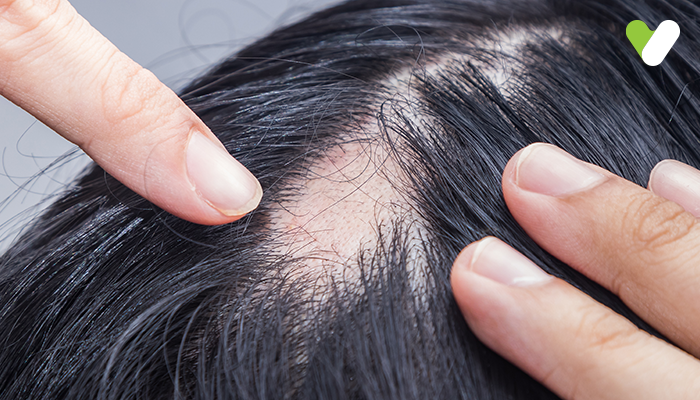
What are folliculitis decalvans?
Folliculitis decalvans is a rare, chronic inflammatory condition that affects the hair follicles. This condition is most commonly seen on the scalp. The inflammation leads to the destruction of follicles, resulting in scarring hair loss (cicatricial alopecia).
This is a type of hair follicle infection that goes beyond the usual “folliculitis”, which is an inflammation of the hair follicles. Folliculitis decalvans is a persistent and destructive condition of the hair follicles. It can leave permanent hair-loss scars. As a result, it’s often brought up when discussing chronic folliculitis treatment.
People with folliculitis decalvans often ask about treatment options for scalp folliculitis, folliculitis decalvans treatment, and how to manage the condition in the long term. We'll look at all of that, including the causes, symptoms, and diagnostic parameters below.
What causes folliculitis decalvans?
The exact cause of folliculitis decalvans is unclear, but several factors play a role in folliculitis decalvans causes. It is most likely an abnormal immune response to the Staphylococcus aureus bacteria:
- Many cases of folliculitis decalvans show the Staph A bacteria on swabs of affected areas, indicating that a hair follicle infection by Staph may trigger the disease.
- A possible abnormal immune response to the hair follicle infection. That is, the body may overreact to the bacteria residing in the follicles, leading to persistent damage.
- Genetic or structural predisposition of the follicles plays a role in folliculitis decalvans causes. Some research suggests that the opening of hair follicles may be different in those affected, making them more vulnerable to infection and chronic inflammation.
- Other contributing factors include tight hairstyles,trauma to the scalp, prior infections, friction, possibly poor hygiene, or other conditions that alter skin flora may worsen or trigger the process of scalp folliculitis and hence play a role in folliculitis decalvans.
- Because the inflammation is ongoing, follicle destruction results, so the condition becomes one of chronic folliculitis treatment rather than an acute one-time infection.
Because of these factors, treatment of folliculitis decalvans is quite different (and more intensive) than typical superficial folliculitis.
What are folliculitis decalvans symptoms?
Recognizing the signs of this condition early is important because early intervention may help limit damage. Typical symptoms include:
- Persistent pustules (pus-filled bumps) appearing around hair follicles on the scalp (or less commonly other hairy areas).
- Crusting, scaling, and redness (erythema) around affected follicles. Some patients report burning, itching, or tenderness of the scalp.
- A characteristic “tufting” of hair: several hairs from one follicular opening—that is, multiple hairs emerging from one or more follicle orifices. This is seen in folliculitis decalvans and is sometimes called tufted folliculitis.
- Over time, the affected area enlarges and leaves a scar. The follicles are destroyed, and hair cannot regrow in those scarred zones.
- Patchy hair loss, often irregular, sometimes oval or round. The scalp may feel tight or show areas of bogginess or induration (thickened tissue).
- Because it’s a form of hair follicle infection that becomes chronic, the state may wax and wane: periods of active inflammation (“flare-ups”) and periods of relative quiet.
- Rarely, the condition may involve areas beyond the scalp—such as the beard, nape of neck, or other hairy body surfaces (though scalp is most common).
If you see repeated bumps around hair follicles, with crusting, multiple hairs at one follicle, and a patch that is losing hair and possibly becoming scarred, these are red flags for folliculitis decalvans.
Also Read: Daily hair fall: is it normal or should you be concerned?
How is folliculitis decalvans diagnosed?
Diagnosis is typically made by a dermatologist, using a combination of physical exams, patient medical history, and sometimes other tests like skin scraping, cultures, or biopsy. This multitude of tests helps rule out other conditions and then confirm the diagnosis. Let’s break down the steps more to understand folliculitis decalvans diagnosis:
- Physical examination: The dermatologist will inspect the scalp and any other affected areas with hair, looking for the features described above (pustules, crusting, tufting hairs, hair loss, scarring). A hair follicle infection, a version of scalp folliculitis left untreated, is often distinguishable by tufting, scarring, and chronicity.
- Swab or culture: A sample of the pustule fluid or crusts may be taken to identify Staph aureus or other bacteria, and to determine antibiotic sensitivity. This helps in planning folliculitis decalvans treatment.
- Hair pluck or trichoscopy: The doctor may look under magnification to see tufted hairs, follicular openings, and signs of follicular destruction.
- Scalp biopsy: In many cases, a small skin/follicular biopsy is done to confirm the diagnosis of a primary cicatricial alopecia and to exclude other causes. The histology shows dense neutrophilic and lymphocytic infiltration around follicles and perifollicular fibrosis.
- Other tests: Sometimes blood tests or fungal cultures may be needed to rule out mimics (for example, ringworm of the scalp or fungal folliculitis), especially if the picture is atypical.
Once the diagnosis is confirmed, a tailored plan for folliculitis decalvans treatment and management can be drawn up.
Can folliculitis decalvans be cured?
Now, the question is: Can folliculitis decalvans be completely cured? The straightforward answer is, not reliably. We can achieve control of the disease and reduction of further hair loss and scarring, rather than a guaranteed complete cure.
Here’s how to understand this:
- Because folliculitis decalvans causes permanent destruction of hair follicles (in the scarred zones), hair cannot regrow in those areas.
- The condition tends to follow a chronic, relapsing course: flare-ups may occur, and without effective management, new areas may become affected.
- However, with timely and appropriate therapy (often long-term), many patients achieve remission (no active disease) for extended periods. For example, systematic reviews show that treatment can successfully put the condition into remission and reduce progression.
- Some more aggressive interventions (laser therapy, surgical excision of lesions) have shown success in long-standing, treatment-resistant cases.
- Thus, in practice, the goal of folliculitis decalvans treatment is to arrest progression, minimize further damage, preserve remaining hair, relieve symptoms (pain, itching), and prevent new scarring.
While we cannot guarantee hair regrowth in scarred areas or a 100% “cure” in every case, good management can significantly improve outcomes and quality of life.
How can you manage folliculitis decalvans?
Management involves medical treatment, lifestyle/supportive measures, and close follow-up. Because this condition involves hair follicle infection and chronic inflammation, a multipronged approach works best.
Medical Treatment Options
Below are the main tactics for folliculitis decalvans treatment:
- Antibiotics: Because Staph aureus is often involved, systemic antibiotics are a core part of treatment.
- Topical antibiotics/antiseptic shampoos: These help reduce bacteria on the scalp surface and follicular openings (scalp folliculitis treatment).
- Anti-inflammatory treatments: Corticosteroids may help reduce the inflammation.
- Laser/photodynamic therapy/surgical excision: For refractory cases, more advanced interventions such as photodynamic therapy or surgical excision of persistent plaques have been described.
- Maintenance therapy/monitoring: Because relapse is possible, maintenance antibiotic or antiseptic therapy may be needed long-term. Also, once the disease is under control, options to handle hair loss, such as hair transplantation or micropigmentation, may be considered if there is no active inflammation.
Lifestyle & Supportive Measures
Beyond medications, there are measures you can adopt to support scalp health, reduce triggers, and live well despite the condition:
- Hygiene of the scalp: Use of gentle, antiseptic, or antibacterial shampoos can help reduce bacterial load. Avoid harsh shampoos or fragrances that irritate the scalp.
- Avoid trauma or irritation: Tight hairstyles, frequent shaving of the scalp, and harsh treatments may aggravate follicle damage.
- Diet and nutrition: While the primary disease is not nutritional, a good diet supports skin and hair health and may help reduce inflammation. For instance, a balanced diet rich in fruits, vegetables, and omega-3 fatty acids has been recommended in a general sense. Some hair/skin studies suggest anti-inflammatory diets may support adjunctive therapy in scarring alopecias. For instance, a Mediterranean diet works well to promote anti-inflammation.
- Stress management: Chronic inflammation can be worsened by stress, so managing stress, getting sleep, exercise, and general wellness is important. It can make a significant difference in reducing chronic inflammation.
- Regular monitoring: Because this is a chronic condition, staying under the care of a dermatologist for monitoring and timely adjustments to therapy is wise.
- Cosmetic support: If there’s significant hair loss, discussing options like hair camouflage, wigs, micropigmentation, or hair transplant may improve quality of life. Permanent folliculitis decalvans treatment is only possible after the infection and inflammation have reduced.
Managing diet specifically for folliculitis decalvans
Research related to folliculitis decalvans treatment diet is limited, but applying or using general hair or skin supportive nutrition makes sense:
- Eat anti-inflammatory foods: e.g., leafy greens, berries, nuts, oily fish (rich in omega-3) that may help reduce scalp inflammation.
- Ensure adequate protein, iron, zinc, vitamins A, C, E — to support hair follicle health.
- Avoid excessive sugar, processed foods, and high saturated-fat meals, which may promote systemic inflammation.
- Stay well-hydrated and maintain a healthy lifestyle.
Thus, the “folliculitis decalvans diet” concept is about supporting scalp/skin health and counteracting inflammation—not a stand-alone cure but a helpful adjunct.
What are the risk factors for folliculitis decalvans?
Here are known or suspected risk factors that may increase the likelihood or severity of the condition:
- Many reports indicate men are more frequently affected than women.
- Often young adult to middle-aged onset, though it can occur at any age.
- As discussed above, a familial tendency or abnormal follicular architecture may make someone more susceptible.
- Presence of Staph colonization on the scalp or prior scalp infections.
- Any condition or practice that causes repeated trauma or infection to hair follicles. Tight hairstyles, shaving, friction, untreated superficial folliculitis, and poor hygiene are all contributing factors to the development of folliculitis decalvans.
- Other inflammatory or skin disorders may co-exist or predispose the scalp to damage.
- Late diagnosis or inadequate early treatment can lead to folliculitis decalvans because folliculitis decalvans is a progressive condition. A delay in treatment may allow more follicle destruction.
Key Takeaways
- Folliculitis decalvans is a rare, chronic condition characterised by persistent hair follicle infection/inflammation leading to scarring and permanent hair loss.
- The term encompasses a more aggressive, chronic form of hair follicle infection than typical folliculitis.
- Diagnosis involves clinical signs (pustules, crusting, tufted hairs, hair-loss patches) plus investigations including swab, biopsy, and trichoscopy.
- While a guaranteed cure is not yet possible, effective management can control the disease, reduce symptoms, prevent progression, and preserve hair.
- Treatment includes antibiotics, anti-inflammatories, topical antiseptics, and sometimes advanced interventions (laser, surgery).
- Lifestyle measures—including a balanced anti-inflammatory diet, good scalp hygiene, stress management, and avoiding follicle trauma—play a supportive role.
- Early diagnosis and consistent management lead to better outcomes. Monitoring and long-term care are key.
- If you have signs of scalp folliculitis that are recurring, spreading, or leaving scars/hair loss, see a dermatologist experienced in hair disorders—because early intervention in folliculitis decalvans can make a meaningful difference.