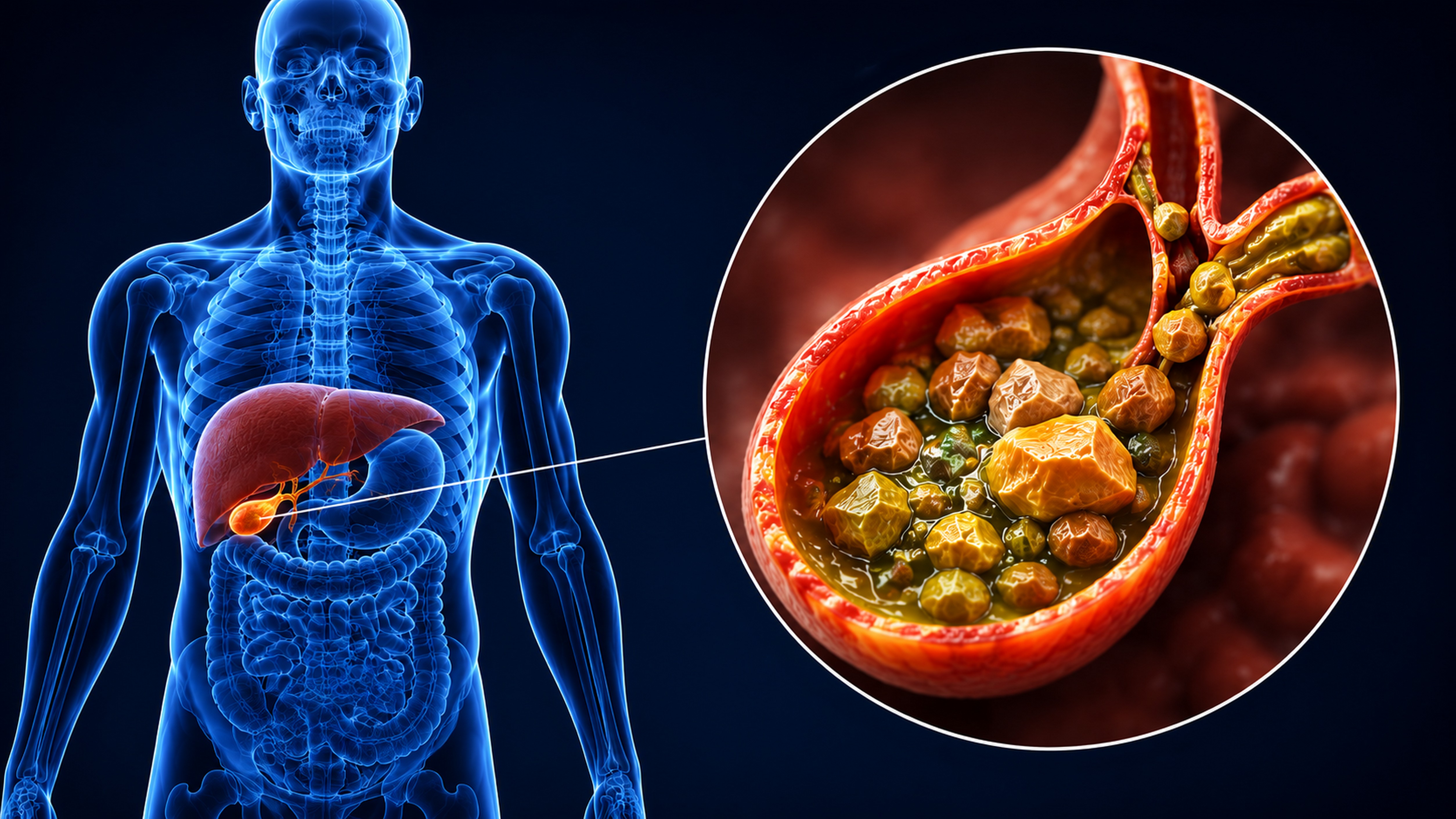
Sharp pain in the right upper quadrant of the abdomen or the centre of the upper abdomen shouldn't be ignored; it often signals gallbladder or liver stones.
Gallstones are small, hardened deposits of digestive fluid that form in the gallbladder. They can be of different sizes, ranging from a grain of sand to a golf ball. When they block bile ducts, they trigger severe abdominal pain (biliary colic), nausea, bloating, or fever. While traditional surgery often means removing the gallbladder entirely, laser-assisted gallstone treatment has gained interest as a modern, minimally invasive approach.
Also Read:What are the different types of gallstones?
What is Laser Treatment for Gallstones?
There are two main applications of laser technology concerning gallstones:
Laser Lithotripsy (Stone Fragmenting): A tiny laser fibre is delivered near the stones via an endoscope (such as during an ERCP procedure) to shatter stones lodged in bile ducts or inside the gallbladder into tiny fragments without making major surgical cuts.
Laser-Assisted Laparoscopic Cholecystectomy: Laser energy is used by the surgeon instead of a standard electric scalpel during laparoscopic surgery to cut tissue and seal blood vessels with extreme precision, resulting in minimal blood loss.
Also Read:Is a Gallbladder Stone Dangerous? Understanding the Risks!
Step-by-Step Procedure of Laser Treatment for Gallstones
- Pre-Procedure Preparation: Requires fasting for 6-8 hours. Doctors perform imaging tests (ultrasound, CT, or MRCP) to locate the stones. Routine blood work and medical evaluations confirm eligibility, and doctors pause blood-thinning medications.
- Anaesthesia Administration: Depending on whether the procedure is an endoscopic laser lithotripsy or a laparoscopic surgery, local sedation or general anaesthesia is administered.
- Access and Laser Energy Delivery: For endoscopic lithotripsy, a thin scope (endoscope) carrying a flexible laser fibre is guided through the digestive tract directly to the target stones. For laparoscopic laser removal, keyhole abdominal incisions are made to insert a camera and laser tools.
- Fragmentation or Dissection: Laser pulses break hard stones into fine particles or dissect surrounding tissue while reducing thermal damage.
- Extraction & Final Inspection: Lastly, tiny extraction baskets or suction remove stone fragments, allowing bile to flow freely again. The area is inspected before the procedure ends.
Key Benefits of Laser Treatment for Gallstones
- Minimal Tissue Trauma: Precise targeting of stones or tissue reduces trauma to surrounding organs.
- Reduced Blood Loss: In laser treatment for gallstones, laser beams automatically seal small blood vessels as they work, resulting in minimal bleeding.
- Faster Recovery & Shorter Hospital Stay: Most patients are discharged within 24–48 hours and resume light daily activities within days.
- Organ Preservation (in select lithotripsy cases): When doctors use laser lithotripsy to break up stones, the gallbladder stays in place, avoiding post-surgical digestive changes.
- Ideal for High-Risk Surgical Patients: Offers an option for patients who cannot undergo major open surgery because of age or underlying health conditions.
Potential Risks & Limitations of Laser Treatment for Gallstones
While laser procedures offer clear advantages, they come with important considerations:
- Risk of Recurrence: If the procedure breaks up the stones but leaves the gallbladder intact, new gallstones can form over time.
- Incomplete Stone Removal: Microscopic fragments can remain, potentially causing secondary blockages or requiring follow-up procedures.
- Not Suitable for Every Patient: Multiple large stones, severe infection (acute cholecystitis), or anatomical obstructions usually require standard surgery.
- Higher Initial Cost & Equipment Availability: Specialized laser equipment and expert operators aren't available at every facility, which can make the treatment more costly.
Laser Treatment vs. Standard Surgery
| Feature | Laser Lithotripsy | Standard Laparoscopic Surgery |
|---|---|---|
| Gallbladder Removed? | No (organ preserved) | Yes (complete removal) |
| Stone Recurrence Risk | Moderate to High | Very Low / Permanent solution |
| Incision Size | None or keyhole | 3-4 small keyhole incisions |
| Recovery Time | 1–3 days | 1–2 weeks |
| Clinical Gold Standard | Select / Complicated cases | Yes (for symptomatic stones) |
Doctors usually recommend laser gallstone removal after a proper evaluation to ensure it is the safest and most effective option for your condition. To know more about gallstone surgery.
Disclaimer:
This article is meant for informational purposes only and must not be considered a substitute for professional advice.