
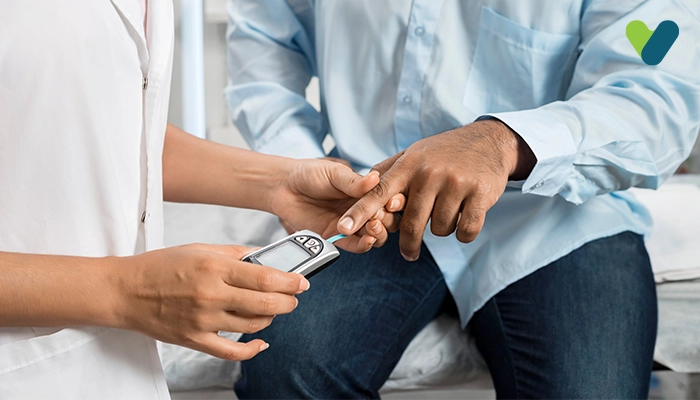
Glucose monitoring plays a significant role in keeping the general well-being, treating diabetes, and maintaining well-being in particular circumstances like pregnancy. The PPBS test is one of the most important examinations that will determine the way your body processes sugar following a meal. It is crucial to understand the PPBS test, the timing of taking it, its normal range, and its differences with other tests, such as fasting blood sugar (FBS), for all people, primarily the individuals who are at risk of diabetes. This paper will describe the PPBS blood test, its importance, how it is performed, normal values among various populations, such as women and pregnant women, as well as respond to the most commonly posed questions about the test.
Also Read: Diabetes: Meaning, Types, Symptoms & Treatment
What is a PPBS Test?
The postprandial blood sugar test, or the PPBS test, is a blood test that measures the level of blood sugar after a meal. Table 2. The name PPBS test is an abbreviation that means post-prandial blood sugar, in which post-prandial means after a meal. The PPBS sugar test is not a fasting blood test that shows the level of glucose in the blood after 8-12 hours of starvation, as in the fasting blood sugar tests, but rather the efficiency of your body to deal with glucose in real-time once you have eaten something.
Also Read: Diabetes Mellitus - Origin & History
The PPBS blood test is essential to people who might spike with the level of sugar in the blood following meals; it is a common phenomenon in people with prediabetes, diabetes, or insulin resistance. Measurement after the meal glucose level gives a more detailed understanding of your metabolic well-being than the fasting sugar level.
Also Read: What Is Type 2 Diabetes?
When to Take a PPBS Test
The most frequent question is: When shall I take the PPBS test? The PPBS test is normally done two hours following the commencement of a meal. The explanation of this time is that blood sugar tends to spike about 1-2 hours after eating, which is a good way of actualising the body's reaction to glucose.
Also Read: Type 1 Diabetes - A Complete Guide
In people with regular diabetes check-ups or management, a PPBS test can be prescribed by the care provider following a regular meal or after the intake of a glucose-containing beverage during certain tests. When you are requested to take a blood test, the FBS (fasting blood sugar) test is normally taken in the morning, and then the PPBS (postprandial blood sugar) test is taken two hours after taking breakfast.
Also Read: Diabetic Diet: Discover The Best Food For Diabetic Patients
It is also important in the time of pregnancy. To safeguard the well-being of the mother and the baby, a PPBS test conducted in a state of pregnancy is often carried out to check the presence of gestational diabetes, which is normally done two hours after one has taken a meal.
How is the PPBS Test Done?
The PPBS blood test procedure is simple and least intrusive:
- A medical worker takes blood out of a vein, commonly in the arm, or, in a few instances, a finger-prick sample can be used.
- The sample of the blood is taken precisely two hours after the meal (or the beginning of the meal) to ascertain the post-prandial glucose level.
- The sample is then subjected to a laboratory or a glucometer to determine the glucose level.
Also Read: Glucose Tolerance Test: Overview, Purpose & Procedure of GTT Test
It is important to mention that the meal taken before the test must be ordinary or standardised because the results can be affected by the extreme level of carbohydrate intake, either high or low. This makes the PPBS test give the correct image of your body's metabolism of glucose.
PPBS Test Normal Range
It is also important to know the normal range of the PPBS test for the correct interpretation of the results. The normal ranges of most adults include:
- Frequent after-prandial blood sugar: less than 140mg/dL (7.8mmol/L) two hours following a meal.
- A prediabetes level: 140-199mg/dl (7.8-11mmol/L) refers to a lack of tolerance to glucose.
- A diabetes range: It is 200mg/dL (11.1mmol/L) and above, indicating diabetes.
The normal range of PPBS among women is usually the same as that of adults, but there can be slight differences based on hormonal fluctuations, age and metabolic changes.
Also Read: Normal Blood Sugar Level Chart by Age for Adults
The PPBS normal range is a little bit lower during pregnancy as the maternal glucose levels should be kept within a very narrow boundary to avoid complications to both the mother and the infant. Normal glucose levels in pregnant women are usually set at below 120mg/dl (6.7 mmol/L) two hours after taking a meal. Higher levels than this can be due to gestational diabetes, which has to be medically addressed.
Why is the PPBS Test Done?
The PPBS test is suggested due to several reasons:
- Diabetes Screening and Diagnosis: As much as fasting blood sugar would give information on the baseline glucose levels, post-prandial measurement would help in identifying spikes, which would not be noticed in the fasting levels. Early detection of diabetes can be detected by the PPBS blood test.
- Diabetes Management Monitoring: In the case of patients who are already diagnosed with diabetes, the PPBS sugar test is an essential method of determining the effectiveness of diet, medication, and lifestyle changes. It assists in setting treatment plans. Also Read: Diabetic Diet: Discover The Best Food For Diabetic Patients
- Pregnancy Care: It is possible to perform a PPBS test on pregnant women to detect gestational diabetes. The early diagnosis assists in avoiding the complications of high birth weight, preterm birth, and neonatal hypoglycemia.
- Detecting Blood Sugar Fluctuations: There are those who may have normal fasting glucose levels but high post-meal glucose levels. These latent spikes are revealed by the PPBS test, and more effective dietary and lifestyle management is administered. Also Read: Diabetes Diet: How To Keep Track Of Your Blood Sugar Levels
Blood Test FBS and PPBS: The Difference
A blood test, namely FBS and PPBS, which entails monitoring the level of fasting and postprandial blood sugar, is recommended for many patients. The key distinction between the two is:
- Fasting Blood Sugar (FBS): The level of glucose measured following 8-12 hours without any food. It gives a control reading.
- PPBS Test: The test evaluates glucose two hours after a meal to show the manner in which the body processes sugar in real-life conditions.
Integration of FBS and PPBS will provide an overview of glucose regulation, enabling the early identification and treatment of diabetes and prediabetes.
PPBS Test During Pregnancy
Hormonal changes during pregnancy cause great changes in glucose metabolism. Hence, the PPBS test in pregnancy is a critical screening test. The way pregnant women are normally dealt with involves 2 steps:
- Glucose Challenge Test (GCT Blood Test): First Level, no fasting is required.
- PPBS Test or OGTT (Oral Glucose Tolerance Test): This is done in case primary screening has revealed a high sugar level.
The normal range of PPBS during pregnancy is a bit stiffer to avoid complications of gestational diabetes. Frequent observation is done to make sure that the blood sugar levels of the mother and the fetus are safe during pregnancy.
How Many Hours Later PPBS Test?
The common test is the PPBS after hours. The medical norms provide that the PPBS blood test is to be carried out two hours after a meal. This is the time when the glucose levels are at their highest after a meal.
A one-hour post-prandial measurement can at times be used, but it is common to use two hours as a diagnostic and monitoring measurement. In the case of diabetic patients, several readings might be necessary during the day to monitor the trends of blood sugar correctly.
Also Read: Know How To Monitor Your Diabetes With HbA1c Test
PPBS Test Preparation
- Compared to fasting tests, preparation for the PPBS test is not very extensive:
- Eat a normal meal and take your normal carbohydrates. Do not take excessive sugar or fat just before the test.
- Another meal should not be skipped before the test because this may influence postprandial glucose results.
Insulin or other medications to control blood sugar (oral hypoglycemics) should be taken as per the recommendations of your healthcare provider.
Indeed, you should prepare the PPBS blood test well to guarantee the accurate depiction of your real after-meal glucose level, and thus, you can be diagnosed and monitored well.
Also Read: Ogtt Diabetes - All You Need To Know
Influencing Factors of PPBS Results
PPBS test results can be influenced by many factors:
- Food type eaten: High-carb diets have the potential to raise postprandial glucose.
- Physical activity: It has been observed that physical exercise immediately after eating can lower the levels of glucose after a meal.
- Drugs: There are drugs like insulin or steroids that influence the readings of the blood sugar.
- Disease or stress: Temporary glucose level may rise due to acute disease or stress.
Knowing these factors, it is possible to decipher the PPBS blood test appropriately and prevent false positive or negative results.
Also Read: Different Types Of Diabetes
Interpretation of the PPBS Test Results
Your healthcare provider will then interpret your results after your PPBS sugar test, along with your fasting blood sugar and other tests.
- A normal PPBS test result shows that the amount of glucose that your body is absorbing after you eat is normal.
- A moderately high value can be a prediabetes finding or a pre-insulin insensitivity.
- Imagery post-prandial glucose levels warrant further testing or interventions, including lifestyle change or drug treatment.
In the case of pregnant women, a sustained above normal level of PPBS blood tests requires a close follow-up that avert cases of complications.
Eating Habits for Healthy Post-Prandial Blood Sugar
To keep the PPBS levels healthy, it is necessary to take into account the following:
- Balanced Meals: Consist of complex carbohydrates, protein, and healthy fats to avoid spikes in sugar levels.
- Exercise: Light physical exercise after meals may be a good way to enhance the glucose metabolic rate.
- Weight Control: Good weight control makes one less vulnerable to diabetes.
- Check Blood Sugar: PPBS test periodic monitoring can aid in the monitoring of the changes and the adjustment of lifestyle or treatment.
- Hydration: When one consumes enough water, he or she can control the level of glucose.
Conclusion
The PPBS test is an essential diagnostic and monitoring instrument in the management of diabetes, evaluation of blood sugar after meals and pregnancy. Knowing the meaning of the PPBS test, the appropriate range of the PPBS test, and the appropriate time to take the PPBS test, one will be able to realise when he has abnormal glucose and manage their health. Management through regular checkups, changing the lifestyle and taking medical advice depending on the result of the PPBS blood tests can prevent complications of high blood sugar. Timely PPBS tests of pregnant women, in particular, are beneficial in ensuring that the health of both mother and fetus is not compromised. The combination of fasting blood sugar and postprandial blood sugar test can give a clear picture of blood sugar regulation, early intervention, and enhanced long-term results. A balanced diet, physical activity, and continuous glucose monitoring are essential to keep the postprandial level of sugar in the body healthy.