
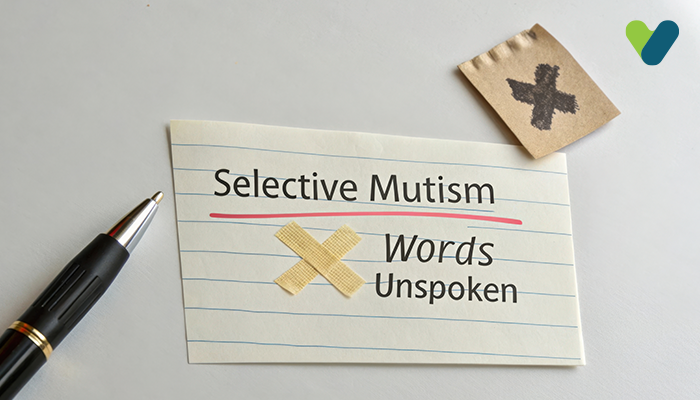
The ability to communicate effectively is one of humanity's great strengths. We use words to communicate our feelings: we say what we feel, we tell and ask, we relate. Speaking to a great number of people is as easy as breathing.
To others, speaking up is like banging on a closed door - they would like to open the door, but their fear of it closing again keeps the door closed. Selective Mutism is a type of mental health disorder in which a person who is fully capable of speaking is unable to do so in certain situations or environments.
Imagine a child who tells long stories at home, makes jokes for the family, and sings aloud when no one is around. However, as soon as they enter school, they freeze. They struggle to answer the teacher, communicate with classmates, or even speak a single word. This behaviour goes beyond simple shyness or obstinacy; it is a profound struggle that can cause significant challenges for the child.
This article is going to discuss what selective mutism really is, its symptoms, causes and some of the difficulties it poses in our everyday lives. We are also going to consider how to manage it and how children and adults can be encouraged to voice their opinions.
What does selective mutism mean?
Selective mutism is a condition of anxiety in which individuals cannot talk in some situations, they can converse easily in other situations. It is most commonly encountered during childhood (typically before age five).
Read More: Anxiety Disorder - Its Types, Causes, Symptoms & Treatment
This may also go undetected by the parent, since at home the child talks normally. The actual manifestations tend to come into the picture at the time when the child goes to school or into a socialization activity.
To illustrate the point, a small girl might share all the information about her home life with her parents,` but will be as silent as a rock at school. Teachers can also consider that she is not paying attention to them, and classmates may believe she does not want to make friends.
As a matter of fact, the silence is not an option. Selective mutism is not well understood. Most adults can accuse the child of being rude, shy, or not confident.
This silence may impair learning, social development, and emotional health unless supported and understood.
What are selective mutism symptoms?
Selective mutism has more indicators than just being shy. Identifying the selective mutism symptoms can assist the family and teachers in identifying when to seek assistance.
- Consistent silence in certain settings: It is also peculiar for the child to talk at home and remain silent at school or in the street.
- Non-verbal communication: The communication between them is not verbal; they nod, point, or write notes.
- Visible anxiety: The child is able to blush, look away, freeze or wiggle when talking.
- Avoidance: They can avoid any activities that involve the talking process, i.e. read out loud, or can be a part of group discussions.
- Long-lasting silence: This continues for at least a month, not just during the adjustment period in a new place.
Adults with selective mutism may face different struggles. Examples of these include not applying to jobs that demand speaking in a meeting or being anxious in a social context. It is typically humiliating and lonely, as the individuals in their lives are not aware of what they are going through.
Recognizing these symptoms in earlier stages can enable parents and other educators to do the right things in order to support the person before the silence becomes a permanent barrier.
What are selective mutism causes?
Selective mutism cannot be explained only in one way. It is thought that the condition is formed as a result of a number of factors in collaboration with each other. Being aware of the selective mutism causes helps eliminate any blame and develop compassion.
- Anxiety as the root: Social anxiety is the most widespread association. The child experiences serious fear in speaking in some settings, always fearing that she is judged, laughed at, or that the child makes a mistake.
- Family history: Assuming that anxiety or other disorders related to it are inherited in the family, a child can inherit a more increased risk of developing selective mutism.
- Personality traits: Children with pre-existing tendencies towards sensitivity or shyness or withdrawnness are more at risk.
- Language challenges: The child fears embarrassment and becomes quiet in case he or she has speech difficulties (stuttering, delayed language development, etc.).
- Environmental pressures: Triggers may include big changes such as relocating to a new country, entering a new school, or finding your way around in a new culture.
It should be mentioned that selective mutism is not the parents', teachers', or the child's fault. Neither is it misbehaviour nor manipulation. It is a mental illness and needs tolerance, encouragement and counselling.
How does selective mutism therapy work?
Selective mutism therapy is one of the best approaches to assist. Therapy aims at reducing anxiety and gradually gaining the confidence to talk. The method is gentle and slow to make the youngster or adult comfortable.
Read More: How To Manage Anxiety Naturally With Diet & Exercise
Therapists often use strategies like:
- Gradual exposure: The individual initially undertakes the practice of speaking in the presence of trusted people and gradually in more difficult situations.
- Positive reinforcement: The smallest success, including whispering or answering a yes/no question, is praised and celebrated.
- Alternative communication: Before speaking, the person may use gestures, pictures or writing to communicate his or her message. This relieves stress and maintains communication.
- Family involvement: Parents are instructed to establish a conducive environment in the home. This can involve playing games that encourage people to talk, or calm conversation without being pressured.
- School involvement: The teachers could be trained on the application of strategies such as pairing the child with supportive students or not forcing the child directly to speak in front of many children.
Therapy is not a quick fix. This takes time and persistence, but eventually, most children and adults start to speak with more freedom as time goes on.
What options exist for selective mutism treatment?
Everyone has different symptoms, for selective mutism treatment can differ. Each individual has an experience unique to him, and care should be provided according to his needs.
Some commonly used approaches include:
- Behavioral techniques: These are methods aimed at the division of speaking into smaller, less problematic steps. A child can begin by recording his/her voice at home and then gradually advance to talking with a teacher.
- Support at school: The role of teachers is significant because it modifies the expectations in the classroom. Stress can be reduced by group activities, buddy programs and non-verbal involvement.
- Confidence building: Social opportunities (through playdates or small group activities) are promoted so that the child can feel at ease practicing speech within low-pressure situations.
- Long-term guidance: Treatment may include a team approach, usually involving therapists and parents as well as teachers.
The trick is to ensure that the process is good and motivating. Coercing speech or punishing silence tends to aggravate the most. Rather, treatment provides an opportunity to feel safe, and the person is slowly prepared to talk.
What about selective mutism in adults?
Selective mutism can also start in adulthood, although there is a lot of discussion on selective mutism in children. Selective mutism in adults may appear in different ways, but it can be equally difficult.
An adult might refuse to answer questions during the meeting, fail to order food at the restaurant or remain silent during a big social gathering. They are either born with it or grow up with it, and only later on in life, in some cases, when they experience anxiety or any form of traumatic experiences.
The impact can be serious. Adults lose the chance to develop their career, socialize and communicate with others. The silence is also normally accompanied by isolation and the sub-ego. As adults, a person might experience more shame, as society believes that they should have no trouble communicating.
The better news is that treatment and encouragement are still possible at any age. After trying to learn the techniques of managing anxiety and being more open, many adults find that they can do it with the assistance of professionals, with practice, and in a friendly environment.
Why is selective mutism a silent battle?
Silent battle is an apt description of what a person with selective mutism experiences. Silence may seem rebellious, bored or arrogant to a stranger. But within its walls is a storm of impatience and worry and self-doubt.
All one has to do is to stand before a crowd and know exactly what he/she wants to say, and the voice is just completely frozen. You have gone numb and your heart is racing and your feet are sweating, and you freeze in place. The harder you work to speak, the more you believe it is impossible. It is the daily life of the person with selective mutism.
The struggle cannot be seen, and thus, other people find it more difficult to comprehend. Most children are wrongly diagnosed as being shy, lazy or uncooperative. Adults can be found to be unfriendly or unprofessional. The fact is that these people are struggling, and their worry restrains them.
This silent struggle can gradually become a process of development and recovery with compassion, understanding and helping. Each word said even the smallest ones, will be a win.
Conclusion
Selective mutism does not represent silence itself, but some invisible struggle between the children and adults, full of anxiety. Despite the possible barriers to education, social life, and confidence posed by the condition, it is not impossible to overcome the condition.
With patience, understanding and the appropriate encouragement, the person with selective mutism will learn to find his voice. Important at an early age is family, teachers and peers awareness, therapy and support during the recovery period. Any minor action leading to speech is a milestone. A history of hope and expression can exist in this quiet struggle with awareness and understanding.