
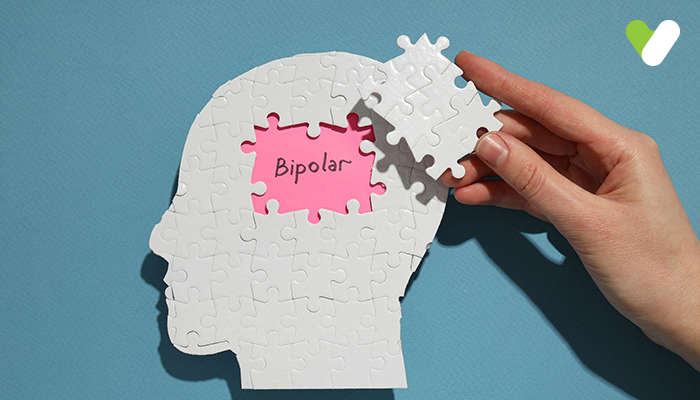
Mental health is one of the least understood concepts of human well-being. As far as society has made great achievements to know more on depression, anxiety, and bipolar disorder meaning, there are still such conditions concealed in prejudice and misunderstanding.
The first one is the Borderline Personality Disorder (BPD), a complex mental disorder that affects people, their feelings, relationships and identity. Over the years of research and advancements in the field of therapy and holism, BPD now bears the immoral stigma of being impossible to treat. People living with this condition can find hope, help and healing nowadays.
Read More About - Different Types Of Mental Disorders
This article covers the symptoms of Borderline Personality Disorder, accessible medical therapy on Borderline Personality Disorder, therapy and medicine in BPD, the importance and worth of Borderline Personality Disorder tests, and lifestyle modifications as a means of recovery. It also emphasizes the life methods that bring calm, strength, and stability to individuals and families going through BPD.
Understanding Borderline Personality Disorder
Borderline Personality Disorder is one of the mental disorders that has a strong effect, unstable interrelationships, weak identity and hasty gestures. The term borderline was a product of early psychiatric history when medical professionals believed that the disorder was on the edge between psychosis and neurosis. Although modern science would not describe it in this way, the name persists.
The feelings of people with BPD are usually overwhelming and beyond control. They can be euphoric and deeply connected with a person next moment and fearful of being deserted or falling into rage or oblivion the following. These affective changes are not just fleeting mood swings, but rather fast and intensely powerful shifts in direction that can consume the day.
BPD occurs in approximately 1.6 percent of the general population, but other research indicates that it might be as extensive as 5.9 percent. It is mostly diagnosed in females, but studies report that men can be affected too, and are usually confused with another related disorder, like PTSD or depression.
Read More - Top 13 Signs of Depression
Symptoms of Borderline Personality Disorder
It is important to identify the symptoms of Borderline Personality Disorder to start the treatment in time. Symptoms commonly appear during adolescence or early adulthood, and they might reduce in intensity with age as long as they are worked out.
Key symptoms include:
- Fear of abandonment: This is a strong fear of being left (even temporarily), which may result in desperate efforts to prevent actual or perceived separation.
- Unstable relationships: Your relationships could alternate between idealisation (you are perfect) and devaluation (you are terrible).
- Feeling of emptiness: Sensation of inner emptiness.
- Explosive anger: Irresponsible, frequent, or impossible anger.
- Dissociation: Feeling disconnected with reality or oneself, especially during stress.
Reasons and Risk Factors
- Genetics: Family history always plays a vital role. Possibly, parents who have a close relative with BPD or another type of personality disorder could be at increased risk.
- Brain function: Neuroimaging pictures indicate differences in brain regions associated with emotional learning, impulse control, and aggression.
- Early childhood: Any form of abuse, neglect, or premature deprivation of caregivers is a vulnerability.
- Environmental instability: BPD may develop in individuals who grew up in an unstable or invalidating environment.
These factors of understanding can help reform the narrative of affliction to healing. BPD should not be treated as a personal failure but as a mental disorder that is handled by a professional.
Diagnosing Borderline Personality Disorder
Diagnosing Borderline Personality Disorder (BPD) is challenging because it shares many symptoms with depression, bipolar disorder, and PTSD, leading to significant overlap and frequent misdiagnosis. Mental health professionals place their trust in a combination of clinical interviews, history taking, and diagnostic criteria.
A borderline Personality Disorder test or a personality disorder borderline test is not a universal test of personality disorder, but a structured test, which assists a clinician in identifying symptom patterns.
These tests can take the form of questionnaires, self-report questionnaires and comprehensive psychological testing. Internet self-tests are very common and can never substitute a professional diagnosis. Rather, they can prompt people to require formal appraisal and counselling.
Medication for Borderline Personality Disorder
Borderline Personality Disorder does not have a specific drug approved for treatment. Nevertheless, the associated symptoms, such as depression, anxiety, or impulsivity, can be managed with the help of medicine. However, one must never take medication without the proper guidance and supervision of a qualified doctor.
Read More - Anxiety Disorder - Its Types, Causes, Symptoms & Treatment
Medical Treatment for Borderline Personality Disorder
Psychotherapy, medication and supportive care are the most effective forms of medical treatment for borderline personality disorder
Psychotherapy
The treatment of BPD still involves psychotherapy. Various treatments include emotional regulation, interpersonal skills and self-awareness.
- Dialectical Behaviour Therapy (DBT): DBT is dedicated specifically to BPD and is skill-based training that focuses on mindfulness, emotional regulation, and interpersonal efficiency. It is talked about as the gold standard.
- Cognitive Behavioural Therapy (CBT): Assists people in breaking unhealthy thinking patterns and adopting healthier coping.
- Schema-Focused Therapy: Works with fundamental patterns and beliefs that develop in childhood.
- Mentalization-Based Therapy (MBT): The enhancement of cognisance regarding your own and others' mental conditions
- Transference-Focused Psychotherapy (TFP): A treatment approach that studies how relationships work in the therapeutic relationship as a way of enhancing interactions in the real world.
Read More - Top 9 Benefits Of Cognitive Behavioural Therapy And How Does CBT Work?
Living with Borderline Personality Disorder
Borderline Personality Disorder is not a sickness in the traditional sense, yet treatment exists to manage its symptoms and support individuals as they grow stronger with time. The majority of patients diagnosed with BPD know that these symptoms never go away, but with proper equipment, treatments, and resources, it is possible to live a stable, meaningful, and fulfilling life. No goal of healing is set, it is a journey, requiring time, perseverance and self-pardon.
With the right therapy and a positive environment, the BPD sufferers can stabilize in the long run. They can and can have better relationships, they can and can succeed in their line of work and they can and can have a personal goal they once could not meet. It is an accomplishment through small and repeated steps, which, ultimately, create a notable difference.
Daily Management Strategies
- Therapy attendance: It is said that consistency of therapy attendance is one of the strongest means of recovery. Quick meetings are helpful because they help a person identify triggers and manage with feelings.
- Prescription drug: A prescribed drug plays a very important role in managing mood swings and anxiety among some individuals. Knowing a course of therapy prescribed by a Psychiatrist will support a more stable condition and avoid relapse.
- Healthy eating: Healthy living contributes to emotional well-being. Exercise not only makes the brain chemistry healthy and diverts from stress, but also a healthy diet provides the body and brain with the tools they need to work best. Proper sleep, which improves day-to-day functioning, is the third most significant component of a different mood stabilizer that is not paid much attention to.
- Mindfulness: Reflecting over the period of training, meditation, deep breathing, yoga, and grounding can bring a person back to now. They can also assist you in reducing anxiety, but an additional benefit of these practices is that they achieve a greater degree of self-awareness, which can be more easily responded to with less panic to emotional stimuli.
Read More - Yoga for Mental Health: Overview, Types & Benefits
- Support networks: There is no healing in a vacuum. Encouragement, accountability and understanding can be gained through the family, friends, peer groups or online communities.The feeling of isolation is not so strong as it are in a safe environment to exchange experiences; this reinforces the motivation to continue moving forward.
Breaking the Stigma
Stigma associated with BPD is also one of the largest challenges that individuals with these disorders struggle with. People have been wrongly accused far too frequently of being manipulative, difficult or attention-seeking. Not only are these stereotypes not true, but they also cause people to want to avoid being treated or shown any compassion than they should.
It is important to keep in mind that Borderline Personality Disorder is a real mental disorder that has its basis in biological divergence and in many instances is induced either through conditioning by trauma or invalidating experiences during early life. Accusing people of their problems serves no purpose other than to generate shame and frustrate the healing process.
The cure to stigma is education. Once family members, places of employment and communities know what BPD really is, they develop empathy and readily support them.
Listening to them with empathy, being patient and confirming what an individual has been through might alter the way that an individual views themselves and their ability to heal. The society will no longer be judgmental but will be understanding, and hence it is not just possible but it is expected that the society will recover.
Final Thoughts
Borderline Personality Disorder is not a pain and instability life sentence. It is a mental disorder that is hard but manageable when the appropriate resources are in place.
With appropriate medical care involving the treatment of the Borderline Personality Disorder, intensive therapy, appropriate drugs to treat Borderline Personality Disorder, lifestyle changes, and heavy support networks, sufferers of BPD can advance an interactive, stable and promising life.
The steps to clarity can be a Borderline Personality Disorder test or a personality disorder borderline test, but it is professional direction that turns the insight into a cure. When you or your acquaintances display signs of Borderline Personality Disorder, that lifeline may save your life. There is hope. There is help. And there is healing.