
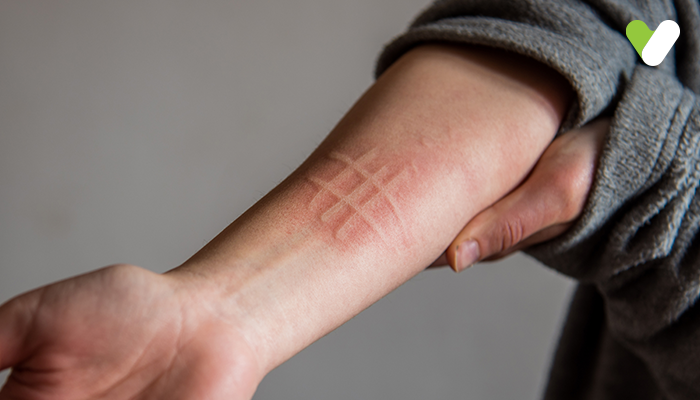
Dermatographia or dermographism (also known as dermatographic urticaria) is a peculiar condition of the skin. Dermatographia is also known as skin writing, and that description is quite appropriate because those with this disease frequently report that even the most minimal pressure or scratch causes raised, red welts that can appear to resemble writing or artwork.
Even though it is non-threatening and not indicative of any underlying serious malady, in that it can be the cause of difficulties in everyday routine, dermatographia is a problem. Consider the idea that you scratch an itch or you rub against an article of clothing, and you can see red streaks appearing on your skin in a matter of minutes. In some individuals, these reactions subside soon, but in other people, the itching, irritation, and marks on the skin can become very wearing on both the emotional and physical levels.
In this post, we will examine the condition of dermatographia in more detail, what it is, how it happens, who is at risk of experiencing it, the symptoms you should watch out for, treatment options available, and any lifestyle coping strategies that can assist individuals in managing the condition more comfortably.
We will also include some of the most common questions, which will aid in the process of demystifying some of the most popular fallacies, like whether dermatographia is contagious, how stress or anxiety may trigger its flare-ups, and so on.
What is Dermatographia?
By definition, dermatographia, or dermographism, is a type of physical urticaria, which is hives, a physical factor at the level of pressure, scratching, or rubbing. Unlike any other allergic skin conditions, in dermatographic urticaria, allergens like pollen or food do not always trigger the development of the condition. Rather, it is brought on by mere irritation due to mechanical means.
How It Works
In persons with dermatographia, the mast cells of the skin are overreactive. These cells trigger the release of histamine in the body when the skin is rubbed or scratched in magnified quantities. The release of histamine in dermatographia is normal because it is produced to guard the body in case of allergic reactions, but histamine is produced insensibly to just mild irritation, the same as the swelling, redness and itching are caused.
Everyday Impact
In the case of a person who does not have the condition, scratching the skin could result in a small white mark, which would wash away in a few seconds. In someone with dermatographia, the same scratch initiates raised welts that may persist for as long as an hour. Usually, such activities as carrying a backpack, wearing tight socks or even drying the body with a towel leave some visible markings.
Duration of the Condition
Dermatographia is chronic and most often benign in most cases. The condition can take months or years. Some people may find that it disappears after some time, without a logical reason, whereas others get periodic flare-ups throughout their lives.
Symptoms and Causes of Dermatographia
The symptoms and causes of Dermatographia include:
Symptoms
The characteristic feature of dermatographia is that when a person scratches or applies light pressure stress on their skin, it produces raised reddish welts or lines. These sores are not arbitrary; they follow the scratching/writing/drawing on the skin exactly.
This unique pattern easily marks dermatographia as different relative to other skin diseases. Nonetheless, the condition does not manifest in one particular way, but varies according to the seriousness of the reaction and the person with sensitive skin.
Here are the most common symptoms in detail:
- Immediate response: The response comes in most cases within 5 to 10 minutes after irritation. This takes far less than regular allergic hives, which take longer to develop. The rate of occurrence is also a major indicator in the case of dermatographia.
- Itching: Severe itching is another of the most annoying symptoms. It is often described as a prickly or burning feeling that is difficult to disregard. Scratching, unluckily, makes the condition worse and causes more welts and irritation.
- Localized swelling: Some people also experience localized swellings in the form of a raised bump or bug bite-like marks. It is a hyper-reactivity of the body even to minor provocations.
- Redness: Flushing or reddening of the affected area can also occur alongside swelling caused by increased blood flow. The redness may extend beyond the real scratch lines, and the reaction thus becomes larger than the initial irritation.
- Short term: The welts would clear up within 30 minutes or 2 hours of placement, but in overly sensitized individuals, it can take longer, particularly when the victim keeps on scratching or the skin is further abraded by tight clothes.
- Patterns: The welts tend to be a real reflection of the pressure that was directed to the skin. Likewise, when someone writes a letter or a shape with their fingernail on their skin, the same letter will fill lines of red and swollen lines within minutes
Although the condition can be mild and short-lived, the dermatographia symptoms can be exceedingly irritating, especially where flare-ups occur daily. Chronic dermatographia can have a disruptive effect on a person when they are severe, as it may include poor quality of sleep and concentration or insecurity about their appearance.
Causes
The actual cause of dermatographia is unknown, but some factors promote it:
- Overreaction of the immune system: The Gauge system becomes oversensitive to insignificant physical stimuli.
- Triggers: Hot weather, cold weather, dry climates or steaming showers may compound the condition.
- Infections: Certain cases of viral or bacterial infection are followed by flare-ups.
- Allergic predilection: Asthmatic, eczematous, and allergic rhinorrhea victims may be more prone.
- Drugs: At times, medications such as antibiotics, opioids, or psychiatric medications make the condition worse.
- Dry skin: Dry and flaky skin will be more prone to irritation.
- Psychological: Stress and anxiety cannot be the direct cause, but may aggravate flare-ups.
Risk Factors
Dermatographia can affect any person, but some research shows that some groups of people may be under more risk than others:
- Age: The condition mostly occurs among young adults and teenagers. Children can also develop it, but in most cases, they overcome the condition as they grow up
- History: This involves a risk to patients who have eczema, psoriasis, or chronic hives.
- Allergies: Allergic individuals (hay fever, food allergies, asthma) complain of dermatographia.
- Geographic-environmental: Being in a dry climate and being constantly exposed to element conditions are predisposing.
- Lifestyle: Flare-ups may also be triggered by tight clothes, hot showers, and activities that irritate the skin (exercise, heavy physical labour).
- Family history: Genetics could also contribute, but dermatographia is not genetically defined.
Treatment Options for Dermatographia
The dermatographia treatment helps with symptoms; therefore, with dermatographia not being a life-threatening condition, it increases your quality of life. Much depends on the severity of Dermatographia.
- Phototherapy: UV light therapy is not usually needed, but it can be used with patients who do not respond to medication.
- Alternative & Natural Remedies: Others seek relief in natural methods that include:
- Herbal tea, such as chamomile or green tea (anti-inflammatory)
- Baths with oatmeal to calm the skin.
- Tea tree or lavender essential oils (exercise caution, when they can be irritating to the skin of some individuals).
- Lifestyle Therapies:Lifestyle changes are often most effective in conjunction with medical treatment. Among some of the strategies:
- Mid-touch skincare: Avoid harsh soap- choose soaps that are gentler and fragrance free and moisturizers.
- Frequent moisturizing: Ointments or thick creams prevent irritation.
- Do not scratch: Use a cool compress instead of itching.
- Wear loose clothes: Soft and breathable clothes ensure that there is less friction.
- Showering: Lukewarm water and use of less time in the shower to avoid drying.
- Handling stress: Stress can be reduced by meditating, doing yoga, or journaling, thus decreasing the level of flare-up due to emotions.
- Balanced diet: Although there is no diet that treats dermatographia, cutting down processed food and drinking plenty of water keeps the skin healthier.
- Track triggers: It may assist in gathering a record of flare-ups to spot patterns, weather patterns, physical activity or diet.
Such lifestyle changes will not necessarily help in curing dermatographia; however, to a larger extent, they can help in reducing its occurrence and intensity.
Conclusion
Dermatographia (or dermographism and dermatographic urticaria) is a widespread and yet not very well-understood skin condition. Although not harmful, it can be irritating, particularly to persons who have to endure frequent flare-ups. Combining treatments with Patient-friendly lifestyle choices like stress management, skin facilitation, and avoiding triggers enables most patients to live comfortably alongside the condition.