
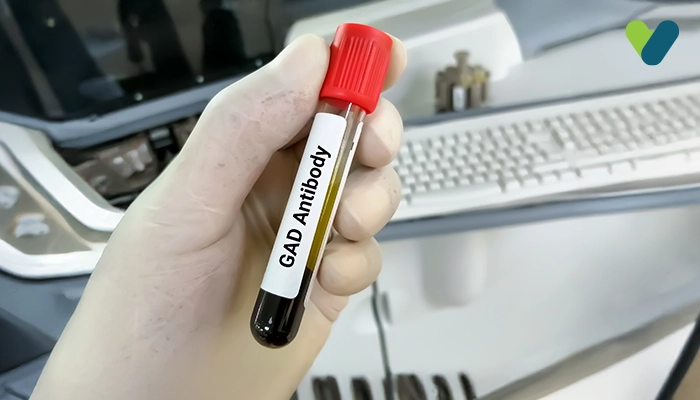
Treatment of diabetes involves proper diagnosis and close observation. The diabetes GAD test is one of the multiple tests that are essential in the determination of risks of diabetes as well as autoimmunity, notably when it comes to type 1 diabetes. The paper will give a detailed account of what a glutamic acid decarboxylase (GAD) test is, why it is done, what the GAD antibodies indicate, the normal level of GAD antibodies, and the importance of a GAD 65 test. The most frequently asked questions will also be answered, like what a positive result of a GAD antibody test implies about the individuals who are at risk of developing type 1 diabetes.
Also Read: Ogtt Diabetes - All You Need To Know
What is a Diabetes GAD Test?
A diabetes GAD test is a blood test that tracks antibodies to glutamic acid decarboxylase (GAD). GAD is an enzyme that occurs in pancreatic beta cells, which produce insulin. Autoimmune diabetes occurs when the immune system targets these cells, and the GAD antibodies are produced.
This test finds a lot of applications in the differentiation of type 1 diabetes and type 2 diabetes. Whereas type 2 diabetes is insulin resistant, type 1 diabetes is an autoimmune disease in which the insulin production is slowly decimated by the immune system. The positive outcome of a GAD test for diabetes can identify autoimmune diabetes and implement the proper treatment management.
Also Read: Intermittent Fasting Diabetes 2
What does having a positive GAD Antibody Test imply?
The presence of GAD antibody in an individual means that the pancreatic beta cells have been attacked by the immune system. It is a sign of autoimmune activity at an early age, indicating an increased vulnerability to type 1 diabetes.
Also Read: Different Types Of Diabetes
It is necessary to mention that a positive GAD test diabetes result does not necessarily indicate that the person is diabetic at that point. Rather, it determines the increased risk of developing insulin deficiency. To obtain an overall picture of the risk profile of the patient, doctors usually prescribe the tests of blood sugar and other autoimmune tests.
Also Read: Top 11 Diabetes Signs & Symptoms You Should Know
Learning about Glutamic Acid Decarboxylase and Its Uses
Glutamate is a nerve transmitter, and it is broken down to form gamma-aminobutyric acid (GABA) by the Glutamic acid decarboxylase (GAD ). GAD is essential in the pancreas in keeping the beta-cells active. The GAD antibodies may be produced to cause beta-cell destruction and decrease insulin secretion, and eventually type 1 diabetes.
Also Read: Best Diabetic Patient Food Chart To Control Blood Sugar
A particular form of diabetes GAD test, which is based on the GAD65 isoform, is the GAD 65 test. This type is mostly related to autoimmune diabetes. Early detection of GAD 65 antibodies can assist in identifying people who are at high risk early before the hyperglycemia progresses to serious levels, and preventive measures or early interventions can be taken .
Also Read: Diabetes Symptoms In 20s: Early Signs And Prevention Tips
Why is the GAD Test Performed?
The GAD test of diabetes is conducted with several purposes:
- Diagnosis of Type 1 Diabetes: This test is used to exclude type 1 and type 2 diabetes particularly in adults whose symptoms can be similar.
- Diagnosing Autoimmunity: Diagnosis of autoimmune disease in the pancreatic beta cells using GAD antibodies.
- Early Prediction of Diabetes: Early detection can be applied to individuals that had family history of type 1 diabetes or that present with early symptoms.
- Surveillance of the Disease: In individuals who have already been diagnosed with diabetes type 1, GAD helps to monitor the ongoing presence of autoimmune action and beta-cell destruction.
The GAD test diabetes would therefore enable proactive management such as lifestyle change, dietary changes and close blood sugar monitoring.
Also Read: Borderline Diabetic - All You Need To Know
Normal GAD Antibody Range
The normal range of GAD antibodies may be different based on the type of laboratory and method of testing. Usually, a negative outcome refers to low or no GAD antibodies, and a positive outcome is an indication of autoimmune activity. Diagnostic results of the GAD test and other tests, and clinical symptoms are interpreted by medical professionals to make an accurate diagnosis.
In the case of the GAD 65 test, any recorded levels of antibodies can be regarded as significant in the prediction of type 1 diabetes, particularly in high-risk individuals. Testing and follow-up. Just as with borderline or positive results, it is recommended that the person be tested and followed up regularly.
Also Read: Normal Blood Sugar Level Chart by Age for Adults
Who Should Get a Diabetes GAD Test?
The Diabetes GAD test is specifically suggested to:
- Children or young adults who develop typical symptoms of diabetes (excessive thirst, urinating a lot, unexplained weight loss ).
- Adults with suspicious cases of type 1 diabetes presentation.
- Patients who have a family history of type 1 diabetes.
- Other autoimmune conditions in patients like thyroiditis or celiac disease.
Early detection of GAD antibodies makes it possible to prevent the condition, and the development of type 1 diabetes can be postponed or controlled more easily.
Also Read: Diabetes Mellitus - Origin & History
How is a GAD Test Done?
A GAD test of diabetes is conducted by a simple blood test:
- A blood sample is extracted through a vein, normally in an arm.
- A sample is forwarded to a laboratory.
- The GAD antibody levels are determined.
The test is not fasting based and is not very time-consuming. The findings assist physicians to differentiate between type 1 diabetes and other types and provide appropriate treatment.
Also Read: Warning Signs & Symptoms of Hypercalcemia
Consequences of Positive GAD Results.
The positive GAD antibody test means that the body possesses autoimmune activity and can predict the occurrence of type 1 diabetes. Significant factors to note are:
- Not every person who gets a positive GAD antibody will instantly be diagnosed with diabetes.
- Repeat testing and continuous monitoring of blood sugar could be recommended.
- Early diagnosis means that changes in lifestyles, nutrition, and medical treatment can be made in time to slow down or reduce the course.
As an illustration, children who have good GAD antibodies can be observed more closely regarding onset of type 1 diabetes like blood glucose level and insulin level. The combination of GAD testing and fasting blood sugar (FBS) as well as HbA1c tests can be useful in the diagnosis of adults with atypical diabetic presentation.
Also Read: Know How To Monitor Your Diabetes With HbA1c Test
Comparison of GAD Testing in Children and Adults
Children: Children having positive GAD antibodies do so much faster than adults towards type 1 diabetes. A GAD test for diabetes can be used to detect diabetes early to allow the parents and healthcare givers to observe the conditions, maintain a proper diet, and arrange insulin treatment where necessary.
Adults: In the cases of adults, the progression of autoimmune diabetes can be slower and is called in Latent Autoimmune Diabetes in Adults (LADA). In this case, the GAD test of diabetes aids in the distinction between type 2 diabetes and type 1 diabetes, and the treatment preferences, such as early insulin therapy rather than oral treatment, are determined.
Also Read: Can We Reverse Diabetes - Myths, Do's And Don'ts
GAD Test versus other Diabetes Tests
Although tests such as fasting blood sugar (FBS), post-prandial blood sugar (PPBS), and HbA1c are used to determine the level of glucose, the diabetes GAD test is used to reveal the presence of autoimmune processes. Combined, these tests give a detailed picture of both the control of glucose and autoimmune risk:
- FBS/ PPBS: Determines the level of blood sugar at a given time.
- HbA1c: Indicates the average glucose level in 2-3 months.
- GAD test: This is used to detect autoimmune antibodies and predict type 1 diabetes.
A combination of these tests will guarantee a proper diagnosis, treatment, and increased long-term results.
Also Read: 6 Best Exercises Diabetic Patients Can Do At Home
Post-GAD Test Monitoring and Follow-Up
Patients having positive GAD antibodies should :
- Periodically check the level of fasting and post-prandial blood sugar.
- Consult endocrinologists/diabetes specialists.
- Repeat testing when necessary to monitor the level of antibodies and beta-cell activity.
- Early glucose variations can be handled by maintaining a healthy diet and exercise.
Such a preventative strategy will be able to prevent the development of type 1 diabetes and implement prompt interventions.
Also Read: Rosuvastatin Diabetes – Uses, Side Effects & More
Autoimmune Diabetes Progression and Lifestyle Management
GAD antibodies tend to appear early in the course of autoimmune diabetes, and this is why the level of blood sugar can be normal now, yet the immune system is in action against the pancreatic beta cells. This process is essential to the patient and the provider. Studies have indicated that persons whose titers of GAD antibodies are high are highly at risk of contracting type 1 diabetes in a few months or years, depending on age, genetics, and environmental conditions. The diagnosis of diabetes, the GAD test is not merely an indicator but a predictive tool which can help to forecast the possibility and time of insulin dependency in case these antibodies are monitored over time.
Also Read: Does Diabetes Affect Sperm Quality?
The lifestyle management is of great significance, especially to the people who test positive. A low-glycemic diet, physical activity, and a low intake of sugar can be used to preserve residual beta-cell functioning and low metabolic stress. Though lifestyle changes are not sufficient in the prevention of type 1 diabetes, they can still help to enhance health and glucose regulation when supplemented with the regular monitoring of fasting blood sugar (FBS) and post-prandial blood sugar (PPBS).
Also Read: Is Sugar-Free Good For Diabetics
Autoimmune diabetes involves family history. The first-degree family members of patients having diabetes of type 1 diabetes have a greater chance of producing GAD antibodies and, consequently, diabetes. The GAD test to diagnose diabetes in siblings or children can be used in early screening of children to identify or detect autoimmunity in children before the manifestation of clinical symptoms. Education and awareness of family members about the early symptoms of hyperglycemia, like excessive thirst and frequent urination and loss of weight that cannot be attributed to any other factor, is a key to early medical intervention.
Also Read: Hypoglycaemia Explained: Diagnose And Treat Low Blood Sugar
The Use of GAD 65 in Early Diagnosis
The GAD 65 test directly attacks the GAD65 isoform that is highly associated with autoimmune activity in type 1 diabetes. Early surveillance and prevention of GAD 65 antibodies in children or adults who have borderline levels of blood sugar allows detection of these antibodies. Happy outcomes can result in more and more intensive glucose monitoring and can prompt the evaluation of the time of insulin administration or enrollment in clinical trials to delay beta-cell damage.
Also Read: How To Increase Insulin Sensitivity?
Conclusion
A diabetes GAD test is a necessary instrument that helps in the interpretation of a case of autoimmune diabetes, especially type 1 diabetes. Early detection of GAD antibodies will facilitate high-risk people to be identified, monitored and timely interventions to prevent failed pancreatic functionality. The GAD test is a complement to other tests of glucose, such as fasting, post-prandial and HbA1c, which provide a comprehensive perspective of autoimmune action and glucose regulation.