
What is sick sinus syndrome?
Think of your heart as having its own natural pacemaker, which is a small cluster of specialized cells called the sinoatrial (SA) node. This SA node is located in the upper right chamber of your heart (the right atrium) and is responsible for initiating the electrical impulse that triggers every single heartbeat. It sets the pace, controlling how fast or slow your heart beats.
Also Read: Human Heart Beat Per Minute – Ranges Explained
Sick Sinus Syndrome (SSS) is essentially a malfunction of this critical natural pacemaker. It's a group of heart rhythm disorders (arrhythmias). In this condition, the SA node doesn't generate electrical impulses normally, or when the electrical impulse is generated, it doesn't travel correctly through the heart's electrical system.
This malfunction can manifest in several ways, often making the heart rate irregular or inappropriate for the body's needs. The main issues associated with sick sinus syndrome include:
- Sinus Bradycardia: A persistently slow heart rhythm (too few beats per minute).
- Sinus Arrest or Pause: The SA node temporarily fails to fire, leading to long pauses in the heartbeat.
- Sinoatrial Exit Block: The impulse is generated but is blocked from exiting the SA node.
- Tachycardia-Bradycardia Syndrome (Tachy-Brady): This is the most complex and common form, characterized by alternating periods of a fast, chaotic heartbeat followed by long, dangerous pauses.
Also Read: Heartbeat Increase Reasons
What are the symptoms of sick sinus syndrome?
The severity and type of sick sinus syndrome symptoms depend entirely on how slow the heart rate gets and how long the pauses are. Alarmingly, many people with SSS are asymptomatic or mistake their symptoms for normal signs of ageing or general fatigue. This can delay the sick sinus syndrome diagnosis.
When symptoms do occur, they are directly related to the brain and other organs not receiving enough oxygen-rich blood during periods of slow heart rate or long pauses.
- Dizziness or Lightheadedness: The most common complaint.
- Syncope (Fainting) or Near-Syncope: Especially during periods of long pauses or rapid changes in rhythm. This is a serious symptom that requires immediate attention.
- Extreme Fatigue or Weakness: The heart isn't pumping efficiently, leading to generalized low energy.
- Shortness of Breath (Dyspnea): Occurs especially with exertion.
- Chest Pain (Angina): Due to the heart muscle not receiving enough oxygen.
- Palpitations: A feeling of a racing, pounding, or skipped heartbeat (more common during the Tachycardia phase of Tachy-Brady SSS).
- Confusion or Memory Lapses: Can result from reduced blood flow to the brain.
It is important to recognize that these sick sinus syndrome symptoms can be intermittent, making the condition challenging to capture and diagnose on a standard ECG.
Also Read: Heartbeat Line Significance & Interpretations
What are sick sinus syndrome causes?
Knowledge about sick sinus syndrome causes helps clarify why a specific sick sinus syndrome treatment is necessary. The causes are broadly categorized as intrinsic (within the SA node itself) or extrinsic (external factors affecting the SA node).
Intrinsic Sick Sinus Syndrome Causes (The Most Common)
- Idiopathic Degeneration/Fibrosis (Ageing): This is, by far, one of the most common sick sinus syndrome causes. Over decades, the specialized cells of the SA node are gradually replaced by fibrous, scar-like tissue. This is a natural, age-related process that leads to poor function.
- Ischemic Heart Disease: Damage to the SA node due to poor blood flow from coronary artery disease (a heart attack can damage the node).
- Inflammatory or Infiltrative Diseases: Less common causes include diseases that involve inflammation or infiltration of the heart muscle, such as sarcoidosis or amyloidosis.
- Prior Cardiac Surgery: Surgical procedures, especially those near the right atrium for complex congenital heart defects, can inadvertently damage the SA node.
Also Read: How Family History Of Heart Disease Can Affect Your Health
Extrinsic Sick Sinus Syndrome Causes (Potentially Reversible)
- Medications: Many common drugs can suppress the SA node's function, especially in susceptible older individuals. These include:
- Beta-blockers.
- Calcium channel blockers.
- Antiarrhythmic drugs.
- Electrolyte Imbalances: Severe imbalances, particularly high potassium (hyperkalemia).
- Hypothyroidism: Hypothyroidism is a condition where the patient has an underactive thyroid gland.
- Severe Sleep Apnea: The condition temporarily slows the heart rate during sleep.
Also Read: Resting Heart Rate Chart
What is the difference between sick sinus syndrome and atrial fibrillation (afib)?
This is a common point of confusion, especially since Sick Sinus Syndrome (SSS) and Atrial Fibrillation (AFib) often overlap.
- Primary Problem: The primary problem in SSS is the malfunction of the SA node, which is the heart’s main pacemaker. In AFib, the primary problem is chaotic, rapid, uncoordinated electrical signals originating from other areas of the atria.
- Rhythm: The rhythm in SSS can be too slow, have long pauses, or alternate between fast and slow. In AFib, the heart rhythm is fast and irregular.
- Mechanism: In SSS, there is a failure to initiate or transmit the electrical impulse correctly. In AFib, there are spontaneous, disorganised electrical re-entry circuits that take over the atria.
- Overlapping Factors: The Tachycardia in TAchy-Brady SSS is often AFib. AFib can also cause SSS. It does so by exhausting the SA node over time. AFib is a common arrhythmia that can occur alone or as part of SSS.
SSS is a problem with the source of the heart's rhythm (the SA node), while AFib is a problem with the chaos of the electrical signals in the upper chambers. When the two occur together, it's often the Tachycardia-Bradycardia form of sick sinus syndrome, which presents a significant diagnostic and treatment challenge.
Also Read: 6 Common Causes & Remedies for Low Heart Rate
What is the difference between sick sinus syndrome and AV block?
Both SSS and Atrioventricular (AV) blocks are electrical conduction disorders; they affect different components of the heart's wiring system.
- Sick Sinus Syndrome (SSS): The issue lies at the top of the electrical system, the SA node. The heart's starting signal is weak, intermittent, or slow.
- AV Block: The issue lies in the middle of the electrical system, the AV node. This node acts as an electrical gate that slows the impulse from the upper chambers (atria) before passing it to the lower chambers (ventricles). In an AV block, the signal is delayed or completely blocked from passing through the gate.
Both conditions can lead to a slow heart rate and similar sick sinus syndrome symptoms, but they require different considerations during diagnosis and placement of a pacemaker, which is the cornerstone of sick sinus syndrome treatment.
Also Read: Get The List Of Heart Diseases And Their Symptoms
Who does sick sinus syndrome affect?
Sick sinus syndrome is predominantly a condition of the elderly. It is the most common reason for permanent pacemaker implantation.
- Age: It is rare in children and young adults unless they have a history of complex congenital heart defects, had previous heart surgery (which can damage the SA node), or have a rare genetic channelopathy.
- Adults: The incidence increases dramatically after the age of 50, with the vast majority of cases occurring in individuals over 70.
The primary reason for this age distribution is that SSS is usually caused by the natural, age-related fibrosis and degeneration of the SA node tissue over many decades.
Also Read: 5 Powerful Types Of Exercises For Heart Health
How common is sick sinus syndrome?
SSS is often less publicized than AFib, but it is quite common, especially among older populations.
- It affects approximately 1 in 600 older adults in the United States.
- The prevalence has been steadily increasing, directly correlated with the ageing population.
- SSS accounts for about half of all permanent pacemaker implantations worldwide, making it a very essential public health issue in geriatric cardiology.
Also Read: Heart Palpitations Treatment
What are the risk factors for sick sinus syndrome?
The risk factors are closely tied to the causes, but it's helpful to summarize who is most vulnerable:
- Advanced Age: As the primary cause is age-related fibrosis, this is the biggest risk factor.
- Coronary Artery Disease: Increases the risk of ischemic damage to the SA node.
- Prior Heart Surgery: Especially surgery for congenital heart defects like transposition of the great arteries.
- Hypertension (High Blood Pressure): Uncontrolled, chronic high blood pressure contributes to heart muscle remodelling and fibrosis.
- Diabetes: Contributes to general cardiovascular disease and tissue damage.
- Cardiac Medications: Being on drugs known to slow the heart rate (beta-blockers, calcium channel blockers) increases the chance of developing symptomatic SSS, especially when other risk factors are present.
Also Read: Which Are The Major Arteries Supplying Blood To The Heart
How is sick sinus syndrome diagnosed?
Making a definitive sick sinus syndrome diagnosis can be tricky because the slow heart rhythms or pauses can be intermittent and may not be present during a brief doctor's visit.
The diagnosis requires connecting two critical pieces of the sick sinus syndrome criteria:
- Clinical Symptoms: The patient experiences typical symptoms (fainting, dizziness, fatigue).
- Objective Rhythm Abnormalities: The doctor captures a relevant SA node malfunction on an ECG device.
The most important step is often capturing the heart rhythm when the patient is actually experiencing the sick sinus syndrome symptoms.
Also Read: Pericardial Effusion: Symptoms, Causes & Remedies
What tests will be done to diagnose sick sinus syndrome?
To meet the sick sinus syndrome criteria, several tests are often necessary to rule out other conditions and capture the elusive rhythm disturbance.
- Electrocardiogram (ECG or EKG): A 12-lead ECG is the first step. It might show a slow heart rate (sinus bradycardia) or specific features like a prolonged P-wave, but it often misses intermittent pauses. Specific sick sinus syndrome ECG findings include long sinus pauses or abrupt changes from fast to slow rhythms.
- Ambulatory ECG Monitoring (Holter Monitor): Since SSS is often intermittent, a monitor is worn for 24-48 hours while the patient goes about their normal life.
- Event Monitor or Mobile Cardiac Telemetry (MCT): If symptoms are infrequent (e.g., once a month), the patient wears a monitor for weeks to months. The monitor records the rhythm when activated by the patient or automatically when it detects an abnormality, dramatically increasing the chances of capturing the key sick sinus syndrome ECG findings.
- Implantable Loop Recorder (ILR): For very infrequent but serious symptoms (like fainting), a small device is inserted just under the skin for up to three years to continuously monitor and record the heart rhythm.
- Electrophysiology (EP) Study: This invasive test is less common but can be used if non-invasive tests are inconclusive. Catheters are guided into the heart to directly measure the time it takes for the SA node impulse to travel (SA Nodal Recovery Time).
The diagnostic process is complete when the patient's reported symptoms are directly correlated with the underlying rhythm abnormality captured on one of these devices—this correlation is the strongest part of the sick sinus syndrome diagnosis
Also Read: Know All About Angiogram Heart Test
How is sick sinus syndrome treated?
The gold standard and most effective sick sinus syndrome treatment for symptomatic SSS is the implantation of a permanent pacemaker.
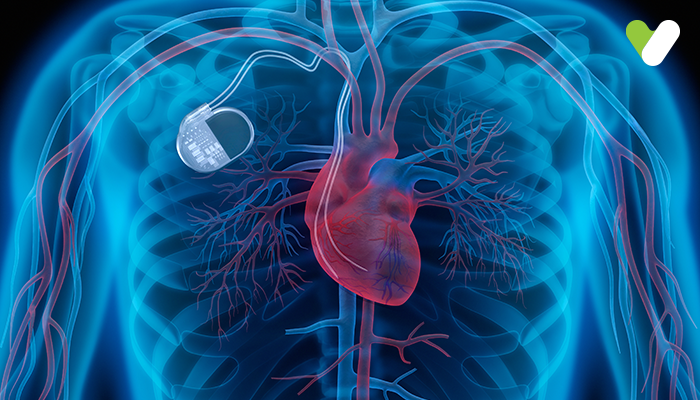
- Pacemaker Implantation: A pacemaker is a small device surgically placed under the skin near the collarbone. Leads (wires) travel through a vein into the heart chambers. The pacemaker monitors the heart's natural rhythm and, if it detects the heart rate falling too low or a long pause occurring, it sends out a small electrical impulse to stimulate a beat.
- Dual-Chamber Pacemaker: The most common type for SSS. It has leads in both the atrium (to sense the SA node) and the ventricle (to stimulate the beat), ensuring the chambers beat in proper coordination.
- Indication: Pacemaker therapy is indicated only when the patient has both objective sick sinus syndrome ECG findings and corresponding debilitating sick sinus syndrome symptoms.
- Medication Management: Before considering a pacemaker, doctors attempt to identify and withdraw any extrinsic causes.
- If a medication is the likely cause, the doctor will adjust the dose or switch the patient to an alternative drug that doesn't suppress the SA node.
- If the patient has Tachycardia-Bradycardia SSS (AFib and slow heart rate), they often need antiarrhythmic or rate-control medications to manage the fast phase, but these medications also suppress the SA node, worsening the slow phase.
- A pacemaker is almost always required in these patients so they can safely receive the necessary medication for the fast rhythm.
Also Read: Purpose, Types & Procedure of Heart Valve Surgery
What are the complications of the treatment?
While pacemaker implantation is a common and safe procedure, it is still surgery and carries minor risks. Understanding the potential complications helps in informed decision-making.
- Pneumothorax (Collapsed Lung): A small risk associated with placing the leads into the vein beneath the collarbone.
- Infection: Infection at the device site or on the leads (endocarditis) is a rare but serious complication requiring antibiotics or device removal.
- Lead Displacement: The leads may move out of position, requiring a minor repositioning procedure.
- Hematoma: Bruising or bleeding at the site of the pacemaker pocket.
- Pacemaker Malfunction: Though rare, the battery could fail, or the device could deliver inappropriate pacing, requiring adjustments or replacement.
Overall, the benefits of the pacemaker, eliminating the risk of fainting, improving fatigue, and preventing life-threatening pauses, far outweigh the risks associated with the procedure.
Also Read: What Is Paroxysmal Supraventricular Tachycardia PSVT)?
How long does it take to recover from this treatment?
Recovery from pacemaker implantation is typically very quick, especially given the immediate improvement in sick sinus syndrome symptoms once the device is working.
- Hospital Stay: Most patients stay in the hospital for less than 24 hours.
- Initial Restrictions (First 4-6 Weeks): You will be advised to limit shoulder and arm movement on the side where the device was implanted. This is crucial to ensure the leads scar properly into the heart muscle and don't dislodge. Avoid lifting the elbow above the shoulder or heavy lifting.
- Long-Term: After the initial healing period, there are generally no permanent restrictions. Patients return to their normal daily activities, often with significantly more energy and less dizziness than before the procedure.
- Battery Life: Pacemaker batteries usually last 8 to 15 years before the entire device needs to be replaced in a quick, minor outpatient procedure.
Also Read: Natural Remedies For Irregular Heartbeat
When should I see a doctor or Cardiologist?
You should consult a cardiologist immediately if you experience any of the following serious sick sinus syndrome symptoms:
- Fainting (Syncope) or a near-fainting spell with blurred vision or severe dizziness.
- New or worsening severe shortness of breath or chest pain.
- A prolonged feeling of a racing heart rate, especially when it is followed by extreme fatigue or lightheadedness.
If you have persistent symptoms, such as chronic unexplained fatigue, lightheadedness upon standing, or a slow pulse (under 60 bpm) that doesn't seem to increase with activity, you should schedule an appointment with your doctor or a cardiologist for evaluation and to check for sick sinus syndrome criteria.
Key Takeaways
- Sick sinus syndrome is a very common, manageable condition, particularly in the elderly.
- The Problem: It is a malfunction of the heart’s natural pacemaker, the SA node, leading to an inappropriate heart rate (too slow pauses, or alternating between fast and slow rhythms).
- Sick Sinus Syndrome Symptoms: Fainting (syncope), dizziness, and extreme fatigue caused by insufficient blood flow.
- Sick Sinus Syndrome Diagnosis: Requires correlating the sick sinus syndrome symptoms with objective sick sinus syndrome ECG findings recorded on a monitoring device.
- Sick Sinus Syndrome Treatment: A permanent pacemaker is the definitive and most effective sick sinus syndrome treatment.
- Sick Sinus Syndrome Prognosis and Life Expectancy: The sick sinus syndrome prognosis is excellent after a pacemaker implantation. Life expectancy for sick sinus syndrome patients who receive a pacemaker is similar to that of the general population.
- The sick sinus syndrome mortality is higher when left untreated, due to complications like falls, injuries from fainting, or stroke.